In this guide
The Bahian roots of Salvador Carnival
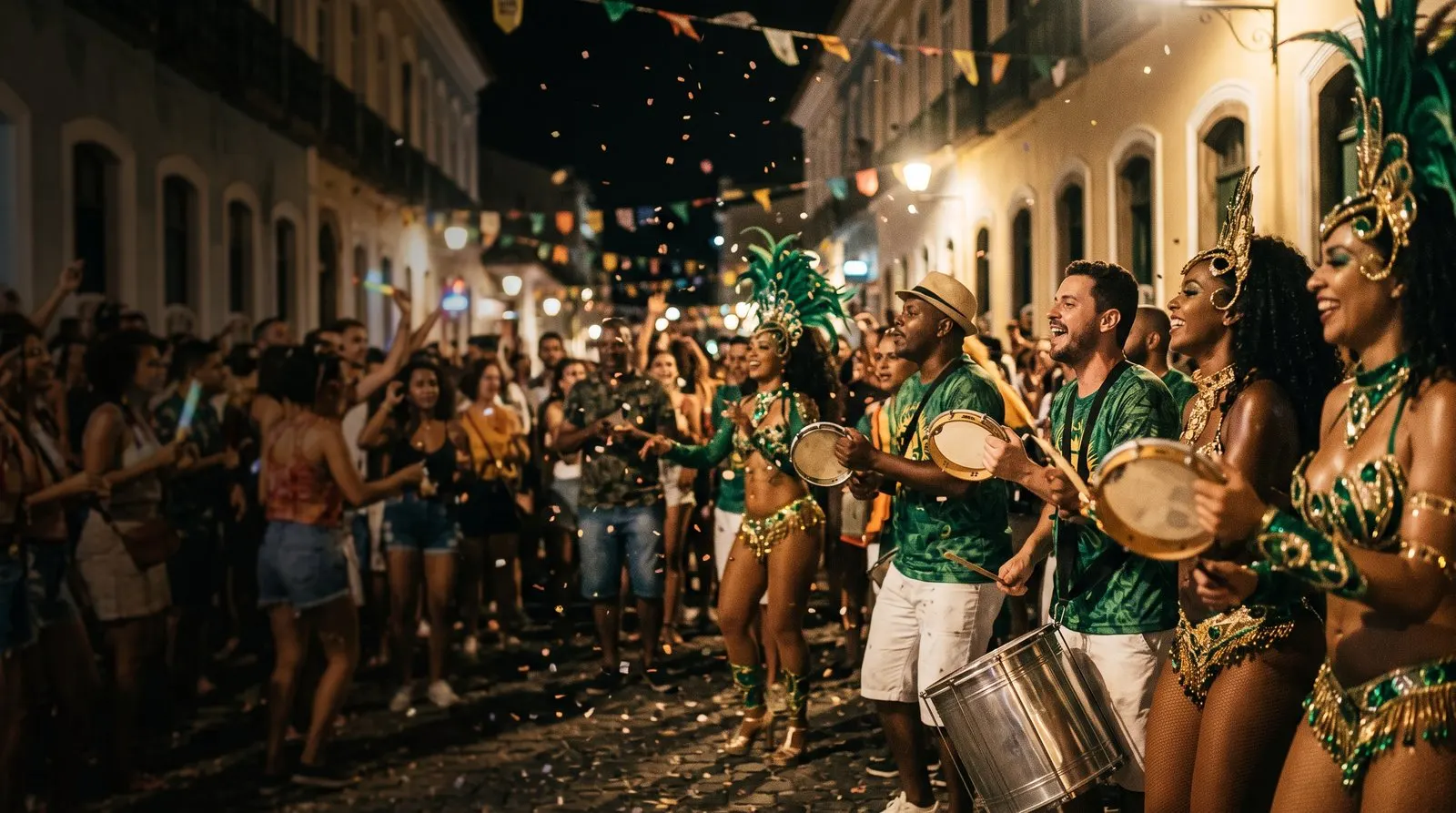
Salvador's Carnival grew out of a deep well of Afro-Brazilian culture, shaped by the city's history as a centre of the Portuguese slave trade and the resulting fusion of African, Indigenous and European traditions. Candomblé rhythms, capoeira and African percussion fed directly into Carnival's music and movement long before the festival took its modern street-party form. That heritage is why Salvador's Carnival feels different from Rio's: less about a judged competition, more about collective celebration rooted in Bahian identity.
The trio elétrico: Salvador's invention
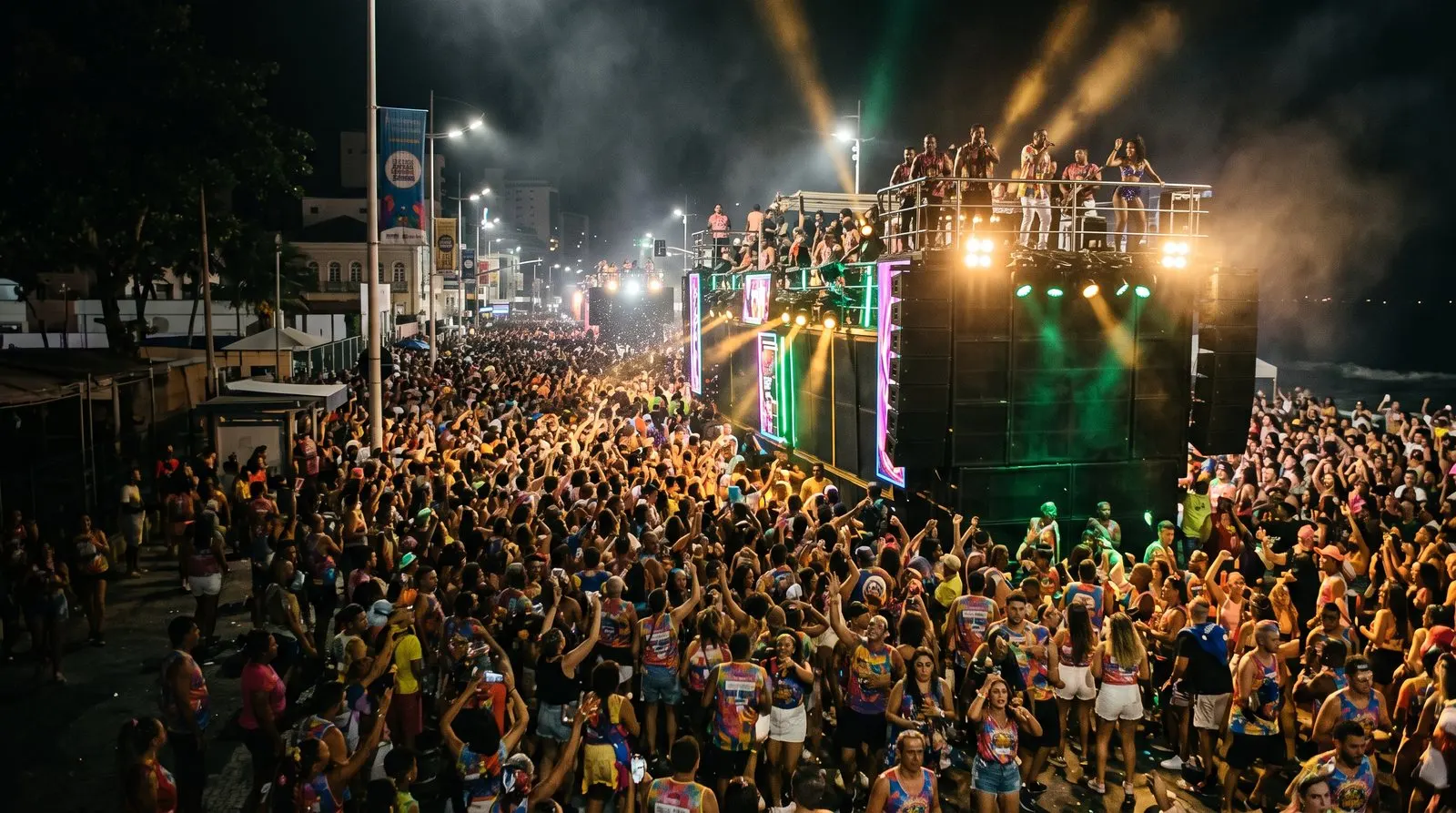
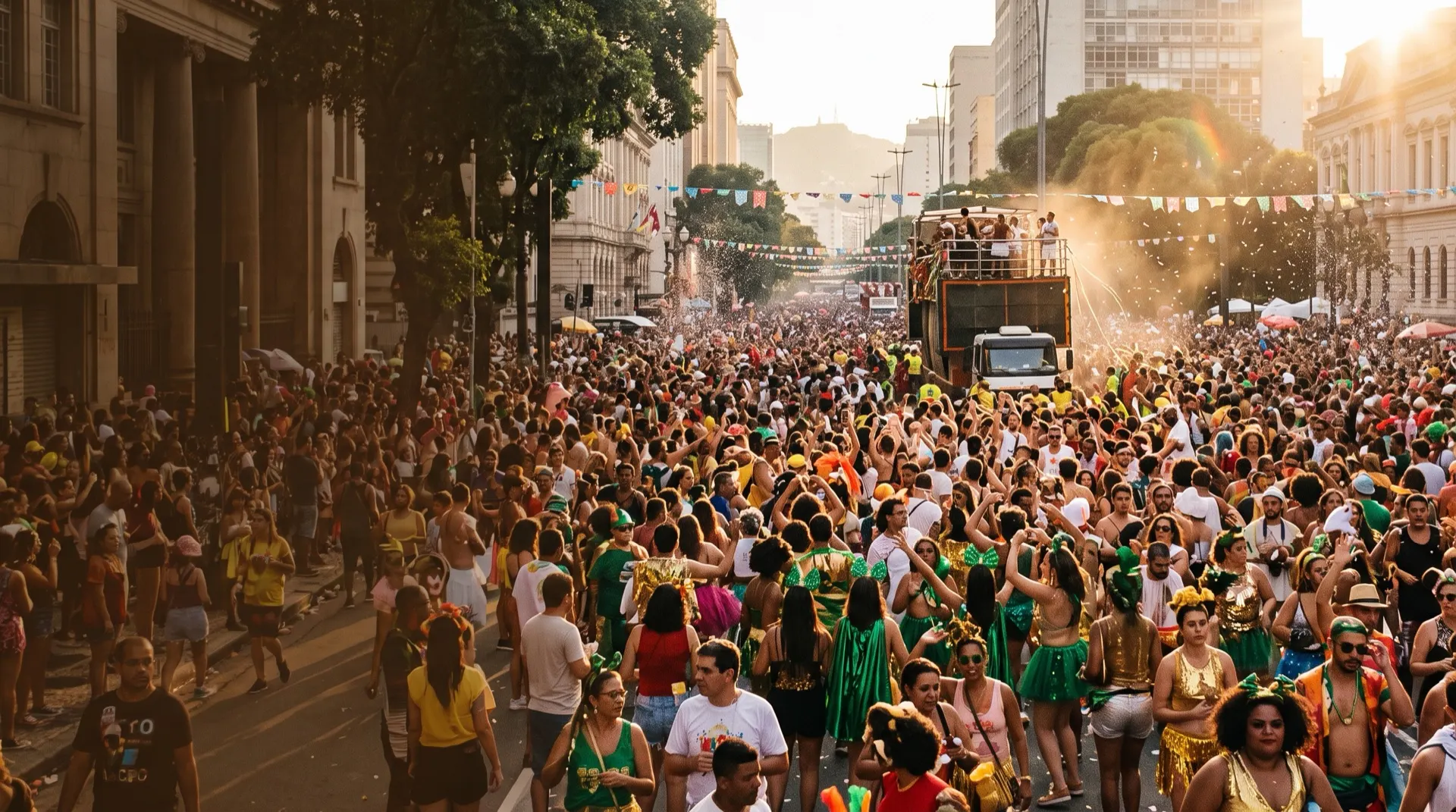
In 1950, musicians Dodô and Osmar mounted a sound system and a small band on a flatbed truck and drove it through Salvador's streets, creating what became known as the trio elétrico. The idea caught on and multiplied, and today fleets of these elaborately sound-equipped trucks carry live bands through the city's main circuits, with crowds dancing alongside for hours at a stretch. The trio elétrico remains the engine of Salvador's street Carnival, turning entire avenues into moving stages.
When is Salvador Carnival 2027?
Salvador's Carnival follows the same national calendar as the rest of Brazil, running from Friday 5 to Tuesday 9 February 2027, with festivities winding down as Ash Wednesday begins on 10 February. Unlike Rio's stadium-based schedule, Salvador's celebrations spread continuously across these days and nights, with circuits active from afternoon until early morning. Many visitors find the city's energy builds steadily from the opening weekend through to the final nights.
The three Carnival circuits
Salvador's street Carnival runs along distinct circuits, each with its own character. The Barra-Ondina circuit, sometimes called the Dodô circuit, follows the coastline and draws huge crowds for its beachside trio elétrico parades, while the Campo Grande and Avenida circuit, known as the Osmar circuit, offers a similar trio-driven experience in a different part of the city. The Pelourinho circuit, set in Salvador's UNESCO-listed historic centre, favours a more traditional, largely acoustic Carnival, with blocos afro and afoxés performing in the cobbled squares rather than from sound trucks.
Axé music and the sound of Bahia
Axé music, a genre blending Afro-Bahian rhythms with reggae, Caribbean and pop influences, emerged from Salvador's Carnival scene in the 1980s and quickly became the soundtrack of the festival. Played live from the trios, axé's upbeat, percussion-driven style is built for crowds moving together through the streets. It remains closely tied to Salvador's Carnival identity, distinguishing the city's sound from Rio's samba-led parades.
Blocos afro and afoxés: cultural heart of the festival
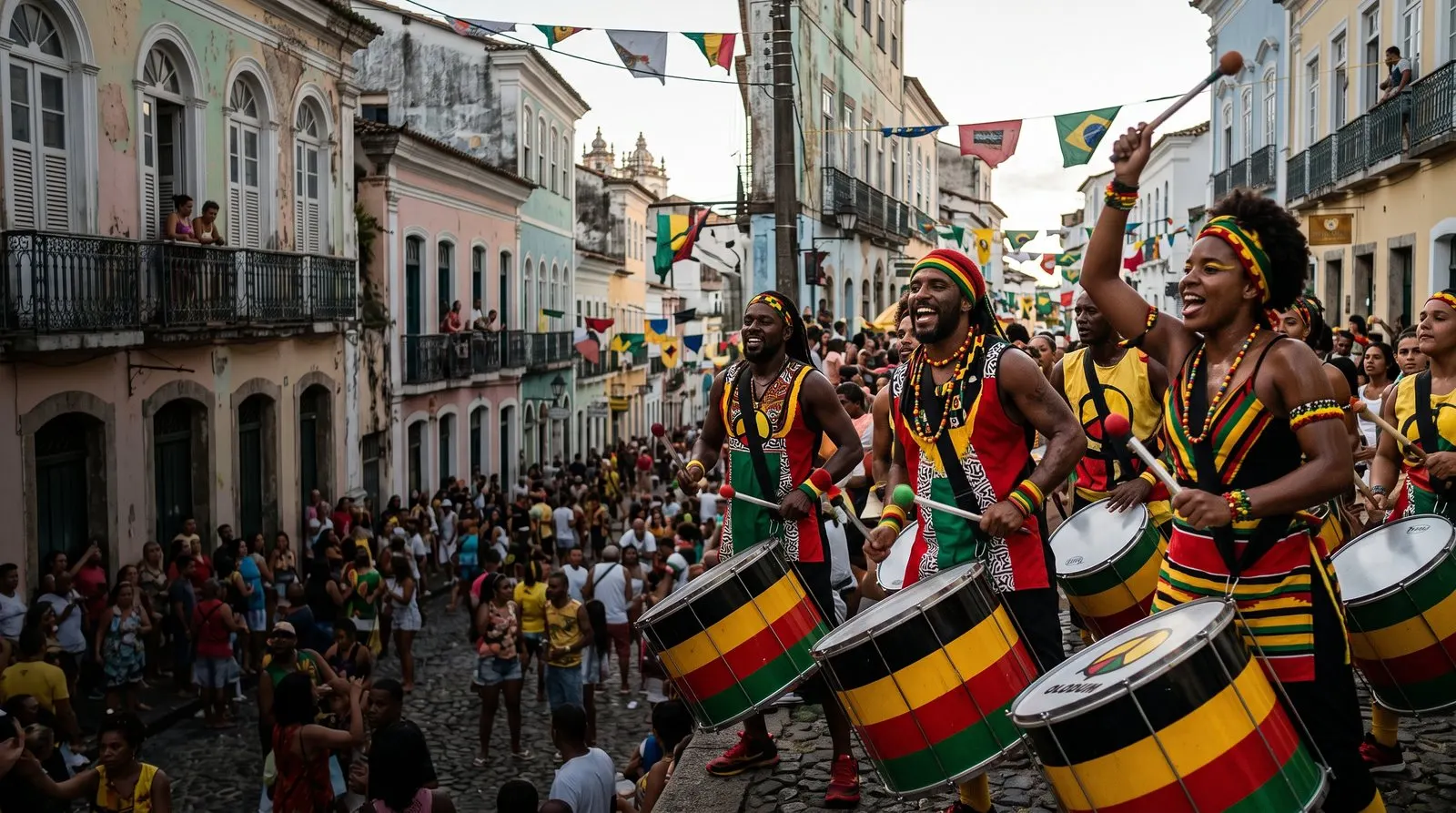
Some of Salvador's most significant Carnival groups carry deep cultural and political history. Ilê Aiyê, founded in 1974 in the Liberdade neighbourhood, is widely recognised as the first bloco afro, created to celebrate Black Brazilian identity and African heritage at a time when Carnival groups rarely did so. Olodum, based in Pelourinho, built an international reputation through its distinctive percussion and Afro-Bahian themes, while Filhos de Gandhy, an afoxé founded in 1949, parades in white and blue robes and turbans inspired by Mahatma Gandhi, blending Afro-Brazilian religious tradition with a message of peace.
How to join Salvador Carnival
Visitors can experience Salvador's Carnival in a few distinct ways. Joining the pipoca, the free crowd that dances alongside a trio elétrico without any barrier, is the most open and budget-friendly option. Those who want a defined space closer to the trucks can buy an abadá, a costume or shirt that grants entry inside a bloco's roped-off section alongside its official members, while camarotes, private viewing structures built along the circuits, offer a more removed, comfortable vantage point with food and drink service.
Frequently asked questions
When is Carnival in Salvador in 2027?+
Salvador Carnival 2027 runs from Friday 5 to Tuesday 9 February, in line with the national Brazilian Carnival calendar, ending as Ash Wednesday begins on 10 February.
Is Salvador Carnival free?+
Much of it is. Following a trio elétrico as part of the pipoca, the open crowd without a rope barrier, costs nothing, though joining a bloco with an abadá or watching from a camarote requires payment.
What is a trio elétrico?+
A trio elétrico is a large sound truck carrying a live band and powerful speakers, invented in Salvador in 1950 by Dodô and Osmar and now central to the city's street Carnival.
What is the difference between a bloco and an afoxé?+
A bloco is a general term for an organised Carnival street group, while an afoxé specifically refers to groups rooted in Afro-Brazilian religious tradition, such as Filhos de Gandhy, which combine Candomblé-influenced ritual with Carnival performance.
What are Salvador's main Carnival circuits?+
The three main circuits are Barra-Ondina along the coast, Campo Grande and Avenida in another part of the city, and the historic Pelourinho circuit, which favours acoustic performances over sound trucks.
Why is Salvador called the biggest street Carnival in the world?+
Salvador's Carnival is celebrated almost entirely in the open streets rather than in a single stadium, with multiple circuits running simultaneously for days, drawing enormous crowds that move freely alongside the trio elétrico trucks.
More Carnival guides
Plan your Carnival