
In this guide
The origins of Rio Carnival
Carnival arrived in Brazil with Portuguese colonists, who brought the European pre-Lenten tradition of entrudo, a rowdier street custom involving water and flour fights. Through the nineteenth and early twentieth centuries, Rio's working-class and Afro-Brazilian communities reshaped the festival around samba, drumming and organised parading groups. The first samba schools, known as escolas de samba, formed in the 1920s in neighbourhoods like Estácio, turning Carnival into a structured, competitive art form rather than a free-for-all street party.
Inside the Sambadrome parade
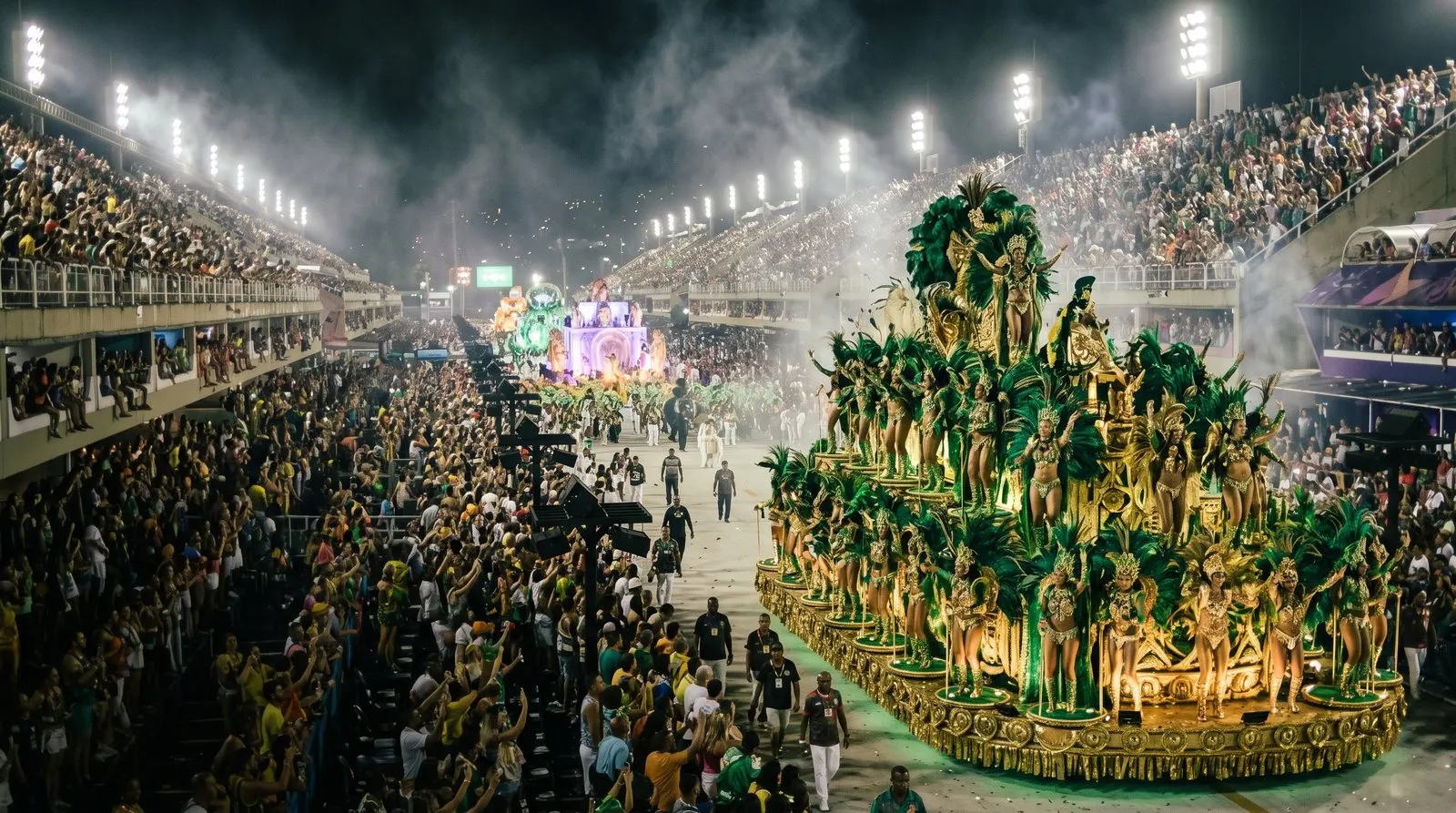
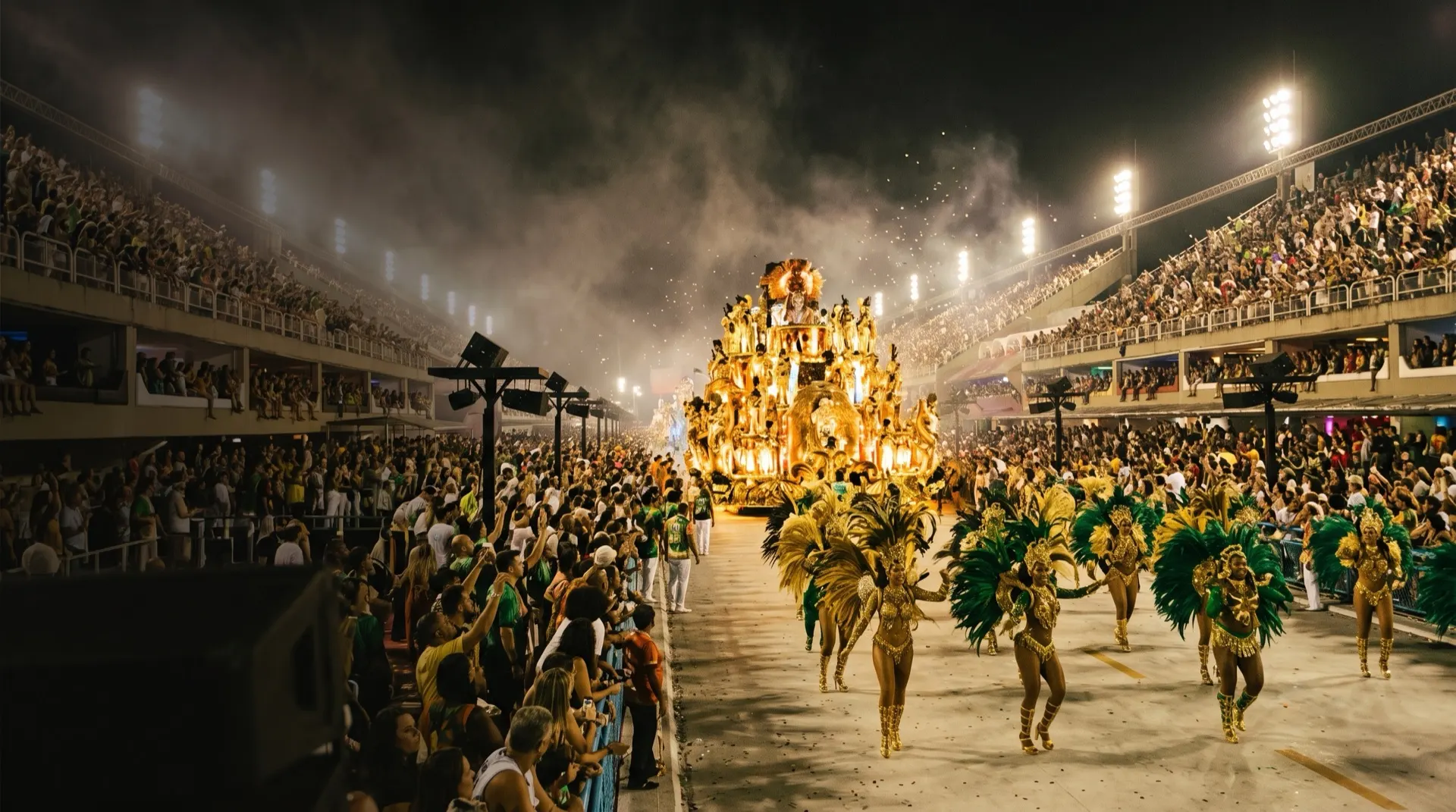
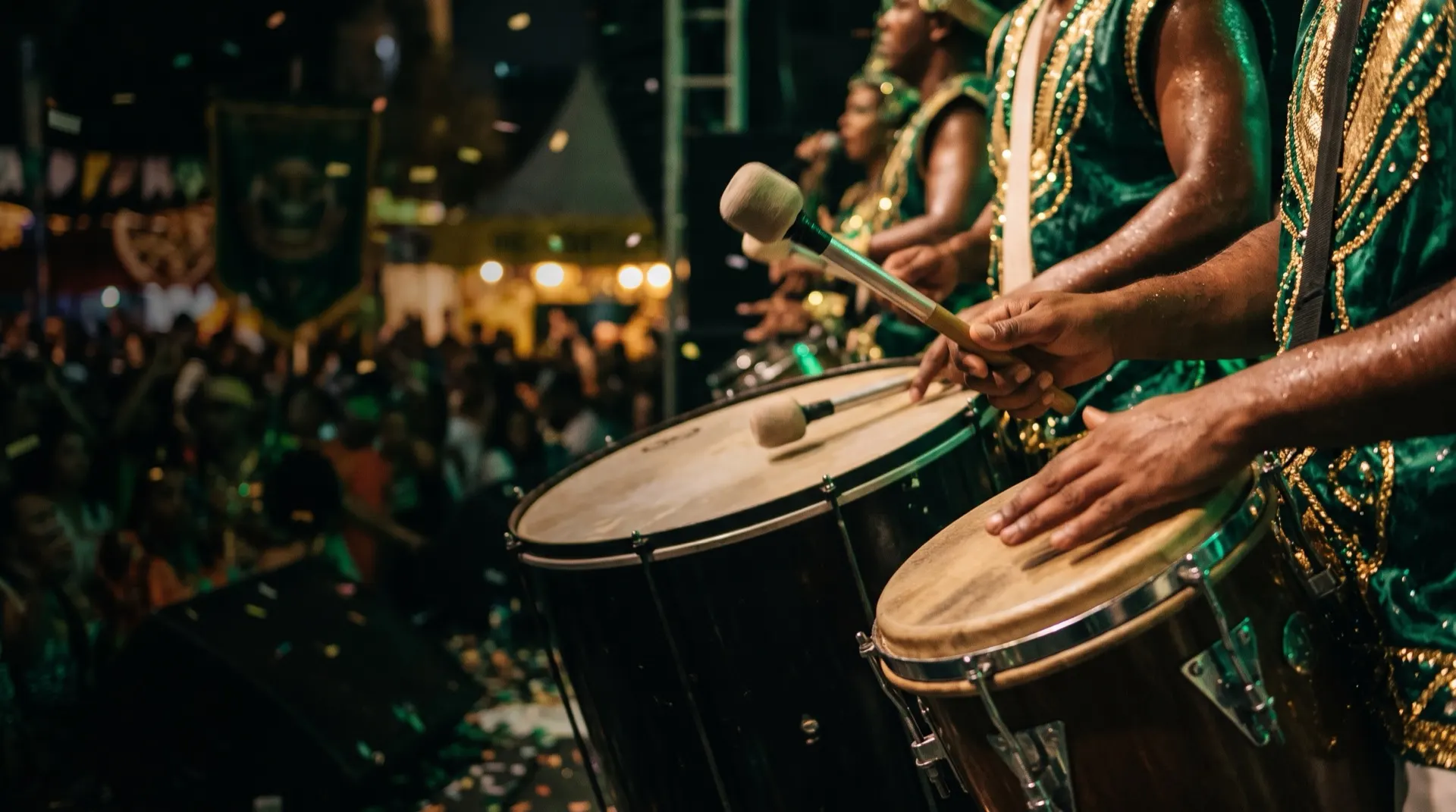
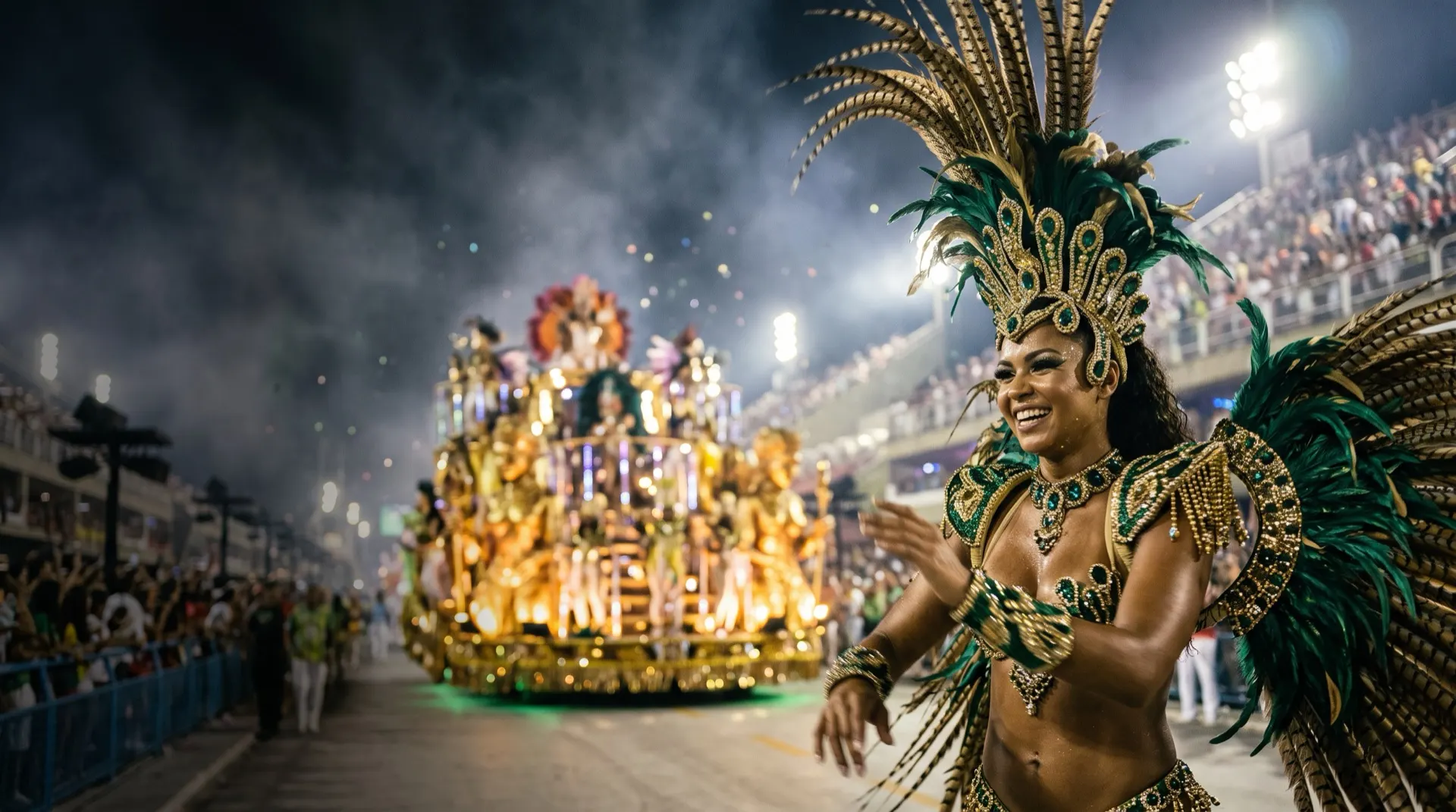
Each samba school presents an enredo, a chosen theme that might touch on history, folklore or social commentary, expressed through a samba-enredo, the original song composed for that year's parade. The bateria, a percussion section of hundreds of drummers, drives the rhythm while alas, or wings, each dressed in matching fantasias, move through the avenue in sequence. Elaborate alegorias, the multi-storey floats, carry performers and sculptural scenery, and the parade opens with a comissão de frente, a frontline cast that introduces the theme, followed by the mestre-sala and porta-bandeira, a couple who dance an elegant routine while presenting the school's flag. Judges score every element, from costume craftsmanship to harmony between drums and dancers, and the result decides who stays in the top division and who gets relegated.
When is Rio Carnival 2027?
Carnival 2027 runs from Friday 5 to Tuesday 9 February, with Ash Wednesday beginning on 10 February and marking the unofficial end of festivities. The Grupo Especial, the top tier of samba schools, traditionally parades across two nights during this window, usually Sunday and Monday. The following Saturday brings the Desfile das Campeãs, the Parade of Champions, where the best-scoring schools perform again for crowds who missed the main nights, often at a lower ticket price.
Where to watch: the Sambadrome and beyond
The official parades take place at the Sambadrome on Marquês de Sapucaí, a purpose-built venue in central Rio designed by Oscar Niemeyer and inaugurated in 1984 to replace parades that once ran straight down city streets. Seating ranges from simple grandstand sectors to private boxes, and arriving early gives a clearer view of the full procession as it builds toward the judges' stand. Outside the Sambadrome, the city's real Carnival pulse beats in its streets, especially around Lapa, Santa Teresa, Ipanema and the historic downtown Centro district.
Street blocos: Rio's free Carnival
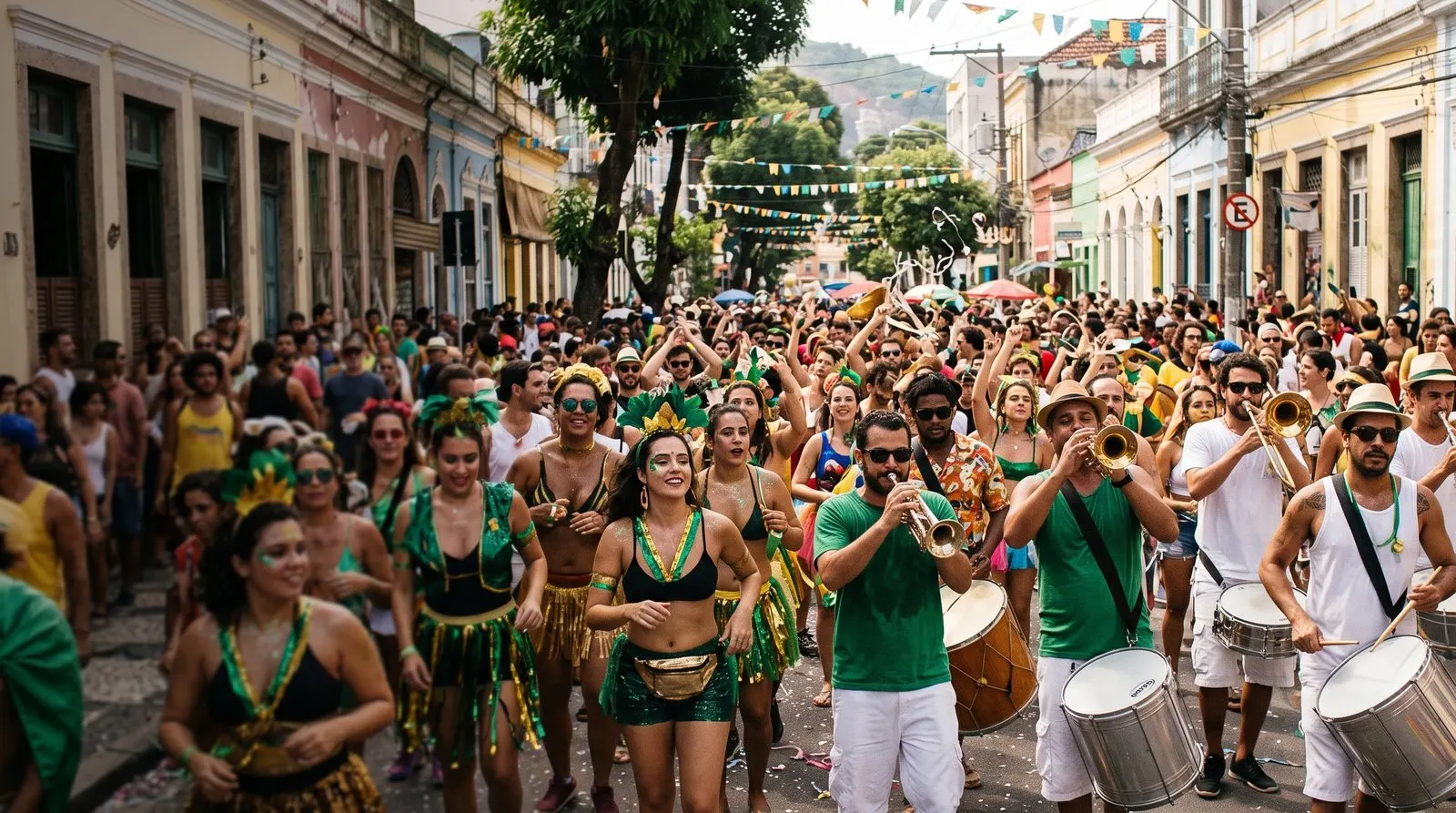
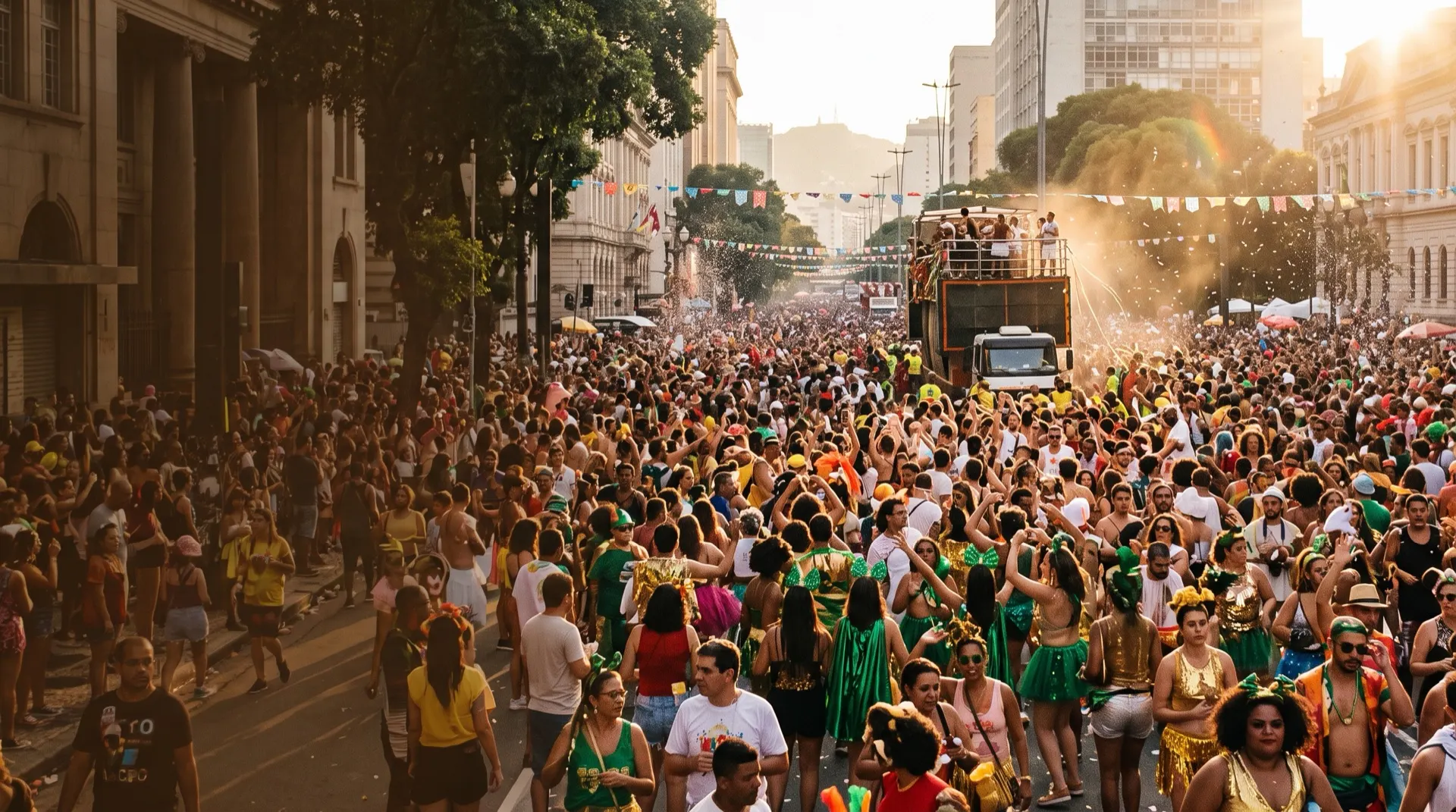
Long before anyone needs a ticket, Rio's blocos de rua take over entire neighbourhoods with brass bands, drummers and crowds in costume. Cordão da Bola Preta, one of the oldest and most beloved blocos, has paraded through downtown Rio since the early twentieth century and regularly draws enormous crowds dressed in its signature black and white. Dozens of other blocos, each with its own route, theme song and loyal following, pop up across Rio in the weeks before and during Carnival, and almost all of them are free to join.
Costumes, colour and craftsmanship
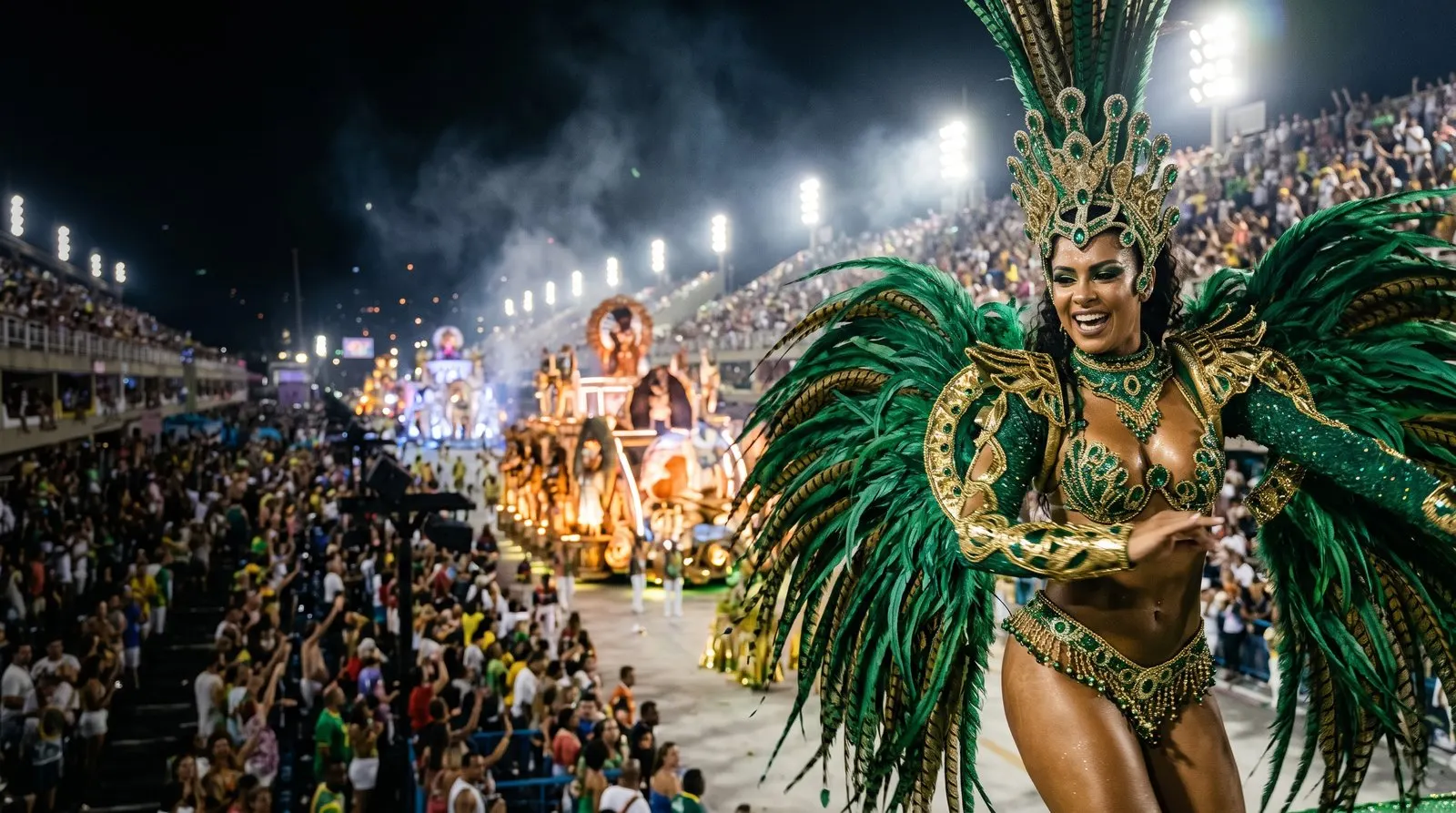
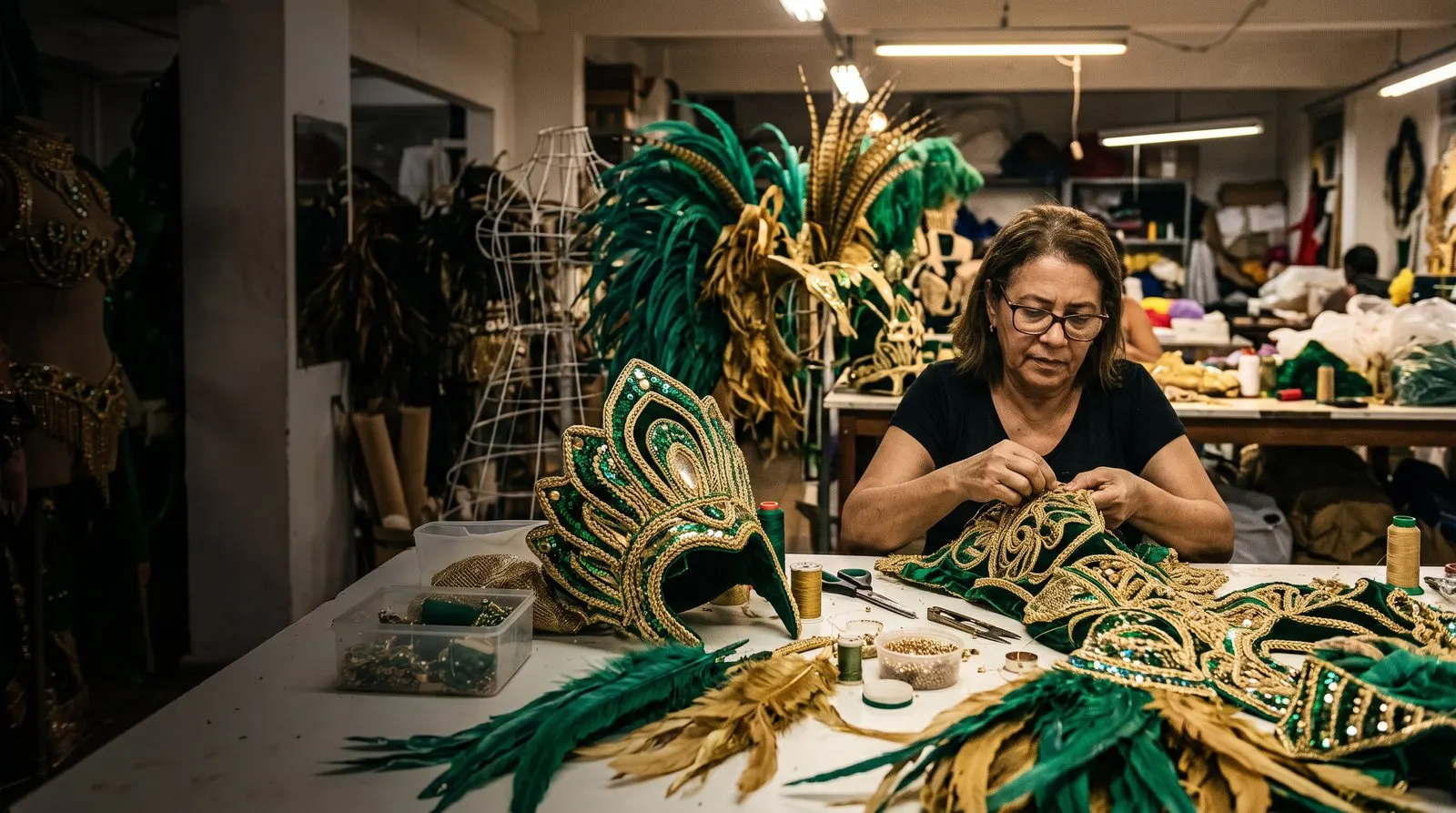
Behind every fantasia lies months of work in samba school workshops, where seamstresses, sculptors and designers build costumes and floats to match that year's enredo. Sequins, feathers, fabric and foam are stretched over wire frames to create towering headdresses and wing-like capes that performers wear for hours of continuous dancing. The visual ambition scales up on the alegorias, where entire scenes, animals or historical figures are rendered in moving sculpture, often lit and animated as the float rolls down the avenue.
Planning your visit to Rio Carnival
Accommodation near the Sambadrome and in neighbourhoods like Copacabana and Ipanema books out months ahead, so early planning matters more than almost anything else. Ticket prices for the Sambadrome vary widely by sector and night, with the Parade of Champions generally offering a more affordable way to see top-tier schools. For those who prefer the open air, simply following the sound of a bloco's bateria through the streets is often the most authentic way to experience Rio's Carnival spirit.
Frequently asked questions
When is Carnival in Rio in 2027?+
Rio Carnival 2027 runs from Friday 5 to Tuesday 9 February, with Ash Wednesday on 10 February marking the close of the festivities.
What is the Sambadrome and who designed it?+
The Sambadrome is the purpose-built parade venue on Marquês de Sapucaí in central Rio, designed by architect Oscar Niemeyer and opened in 1984 for the official samba school parades.
Do I need a ticket to experience Rio Carnival?+
Only the Sambadrome parades require tickets. Street blocos, which make up a huge part of Rio's Carnival atmosphere, are free and open to anyone who wants to join.
What is a samba-enredo?+
A samba-enredo is the original song a samba school composes each year to match its chosen theme, or enredo, and it sets the rhythm and story for the entire parade.
What is the Parade of Champions in Rio?+
The Desfile das Campeãs is a repeat parade held the Saturday after the main Grupo Especial nights, featuring the top-scoring samba schools and typically offering more accessible ticket prices.
What is Cordão da Bola Preta?+
Cordão da Bola Preta is one of Rio's oldest and most popular street blocos, known for its black and white costumes and its long-running parade through downtown Rio during Carnival.
More Carnival guides
Plan your Carnival