
In this guide
Fantasia: the art and meaning behind Carnival costume
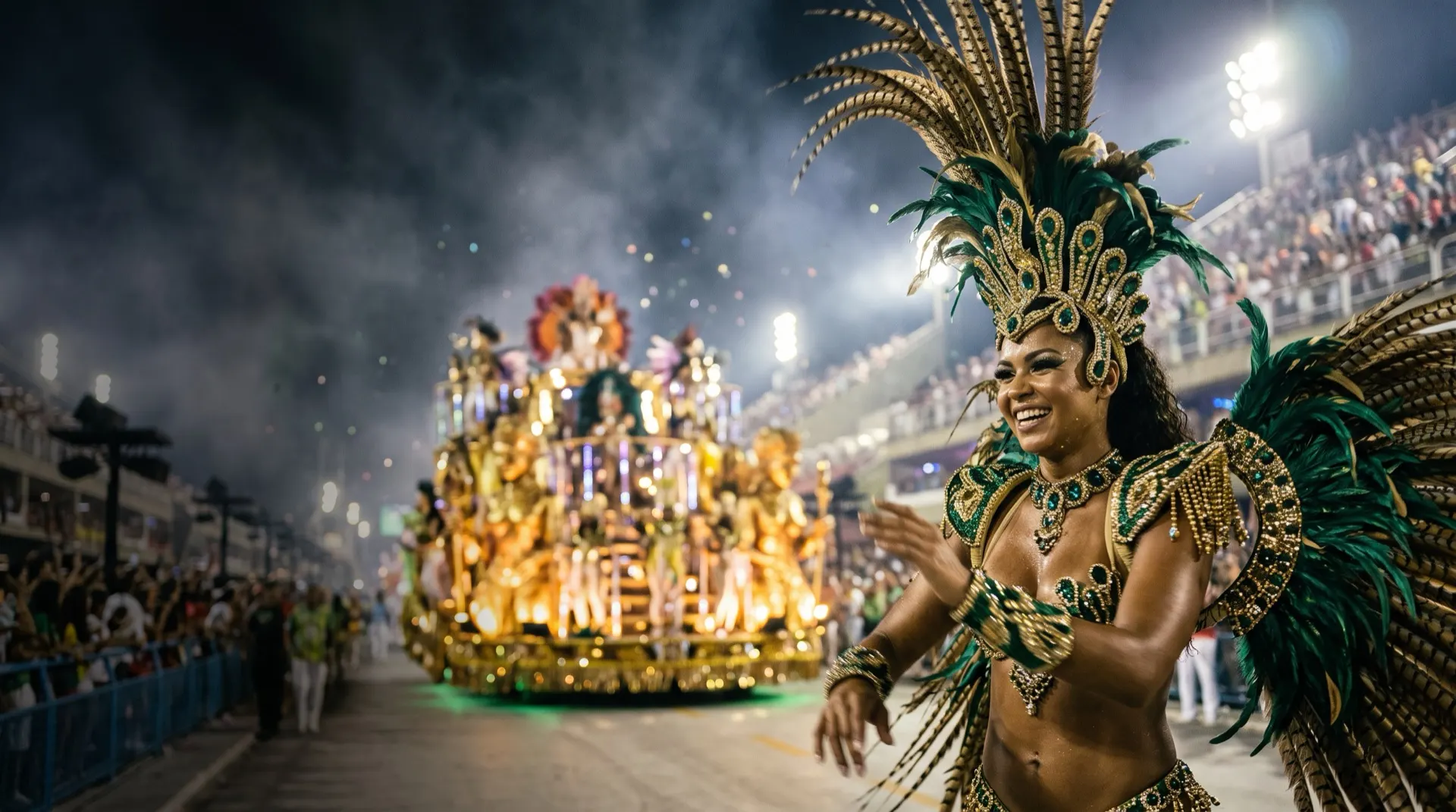
Fantasia is the Portuguese word for costume, and it covers everything worn during Carnival, from a plain T-shirt at a street bloco to the elaborate, themed outfits performers wear in official samba school parades. In Rio's Sambadrome parades, fantasias are designed to match each section of the parade to the school's enredo, or storyline, so colors, fabrics, and ornamentation all carry narrative meaning rather than being chosen for looks alone. Outside the stadium, fantasia is simply the word Brazilians use for any costume worn for the occasion, however simple or elaborate.
Headdresses and feathers: Carnival's most iconic image
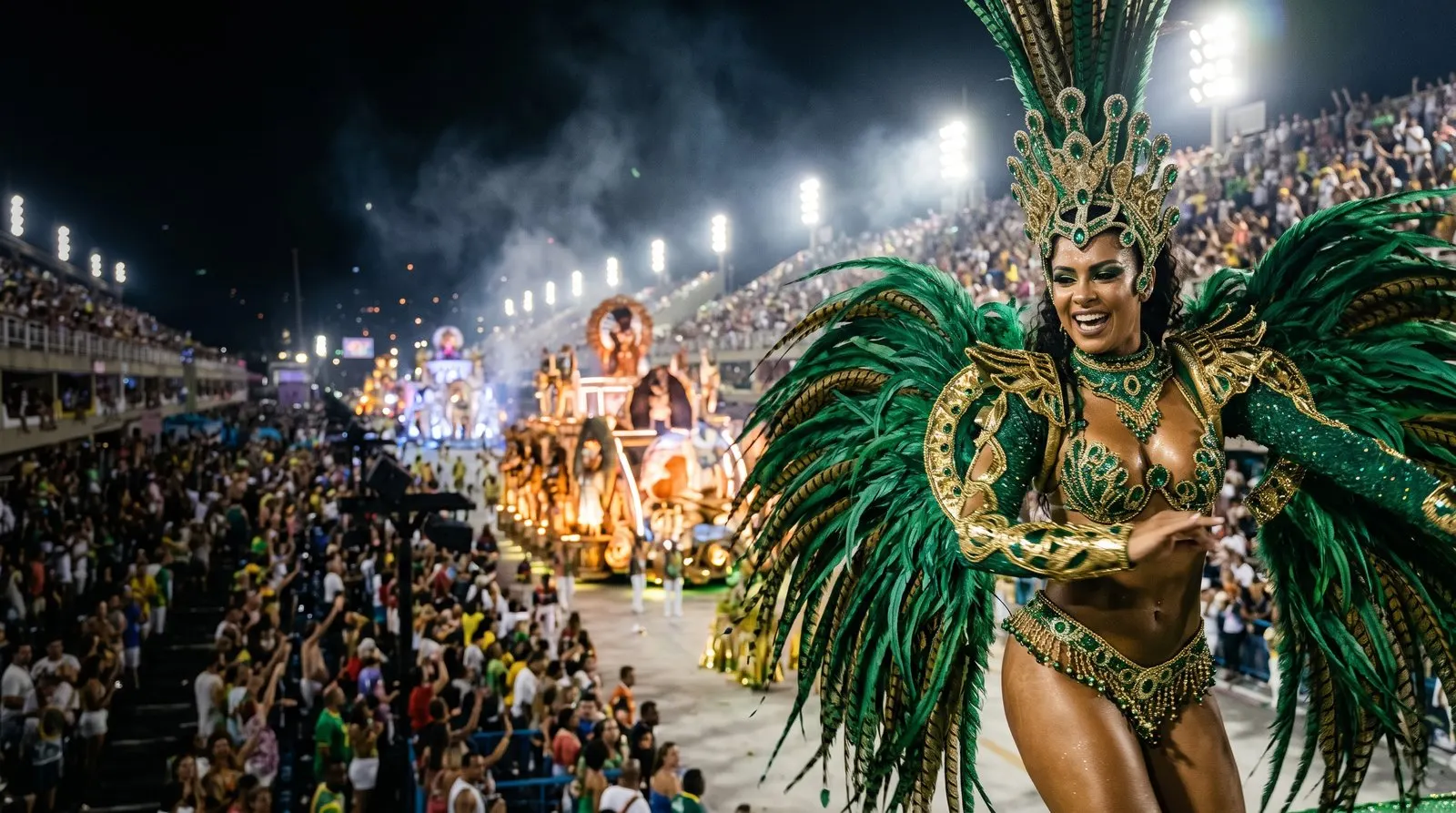
The towering feathered headdress is one of the most recognized images of Brazilian Carnival, worn by the destaques, the standout performers positioned to draw the eye during a samba school's parade. These pieces are built around lightweight frames so performers can dance and walk for the full length of the parade route while carrying structures that can rise well above head height. Designing a headdress that survives hours of movement without losing its shape is a specialized skill passed down within samba school ateliers.
Alegorias: the floats that tell a story
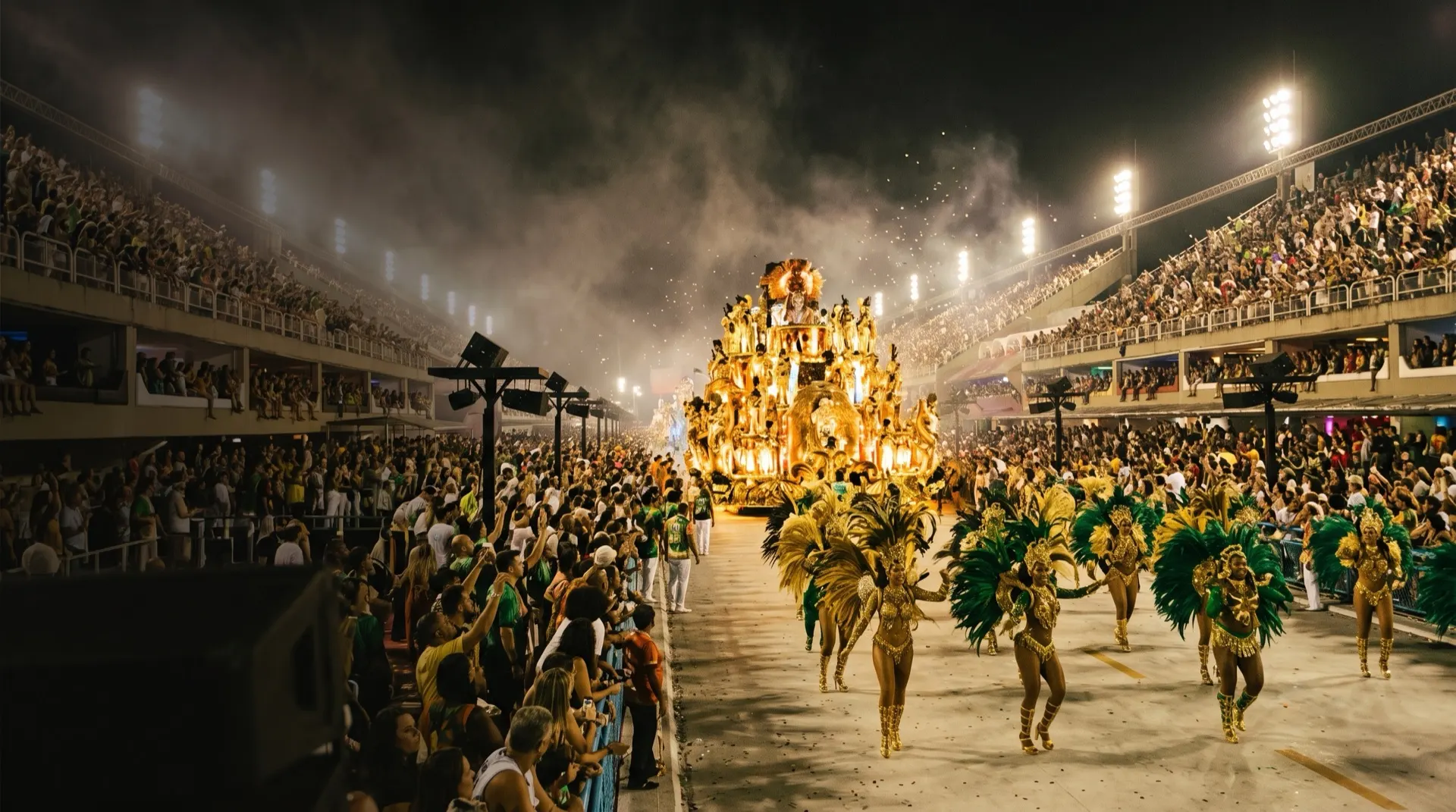
Alegorias are the large floats that anchor a samba school's parade, built to visually represent chapters of that year's enredo. A single school's parade typically includes several floats, each designed around a different scene or theme, often carrying performers and dancers who interact with the structure as it moves. Floats are engineered to be both visually dramatic and mobile, which means balancing elaborate sculpture and lighting against the practical need to move slowly and safely down the parade route.
Barracões: where Carnival is built all year round
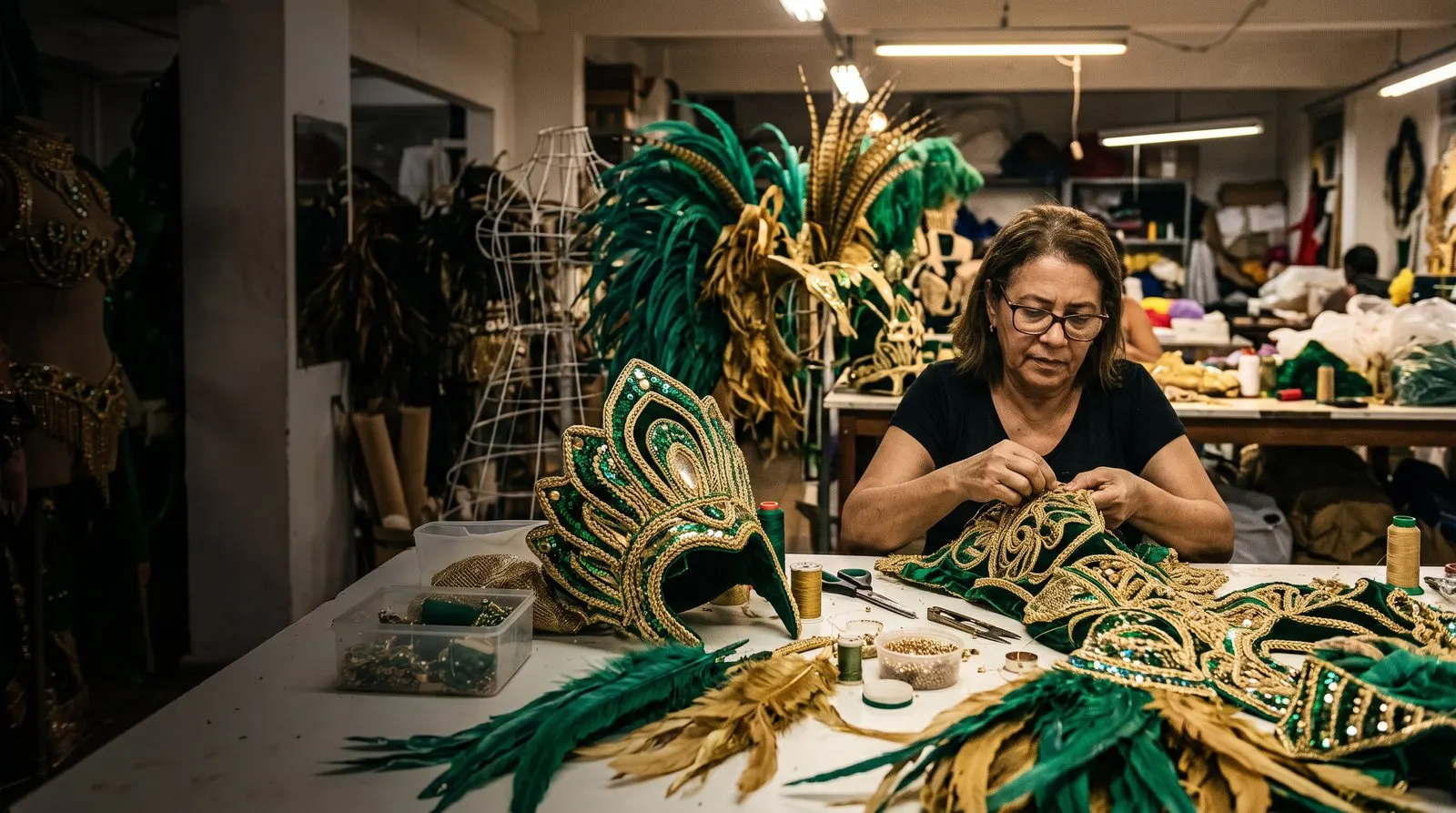
A barracão is the warehouse-style workshop where a samba school builds its costumes and floats, and the work inside runs almost continuously, starting again not long after one Carnival ends in preparation for the next. Rio's samba schools operate out of dedicated barracões, often concentrated in purpose-built complexes, staffed by seamstresses, sculptors, carpenters, and painters working under a designer, or carnavalesco, who sets the creative direction for the year's parade. The scale of this operation is part of why Carnival costumes and floats look like nothing produced for a single-day event, they are the product of a full annual production cycle.
Olinda's bonecos gigantes: giant puppets with giant personalities
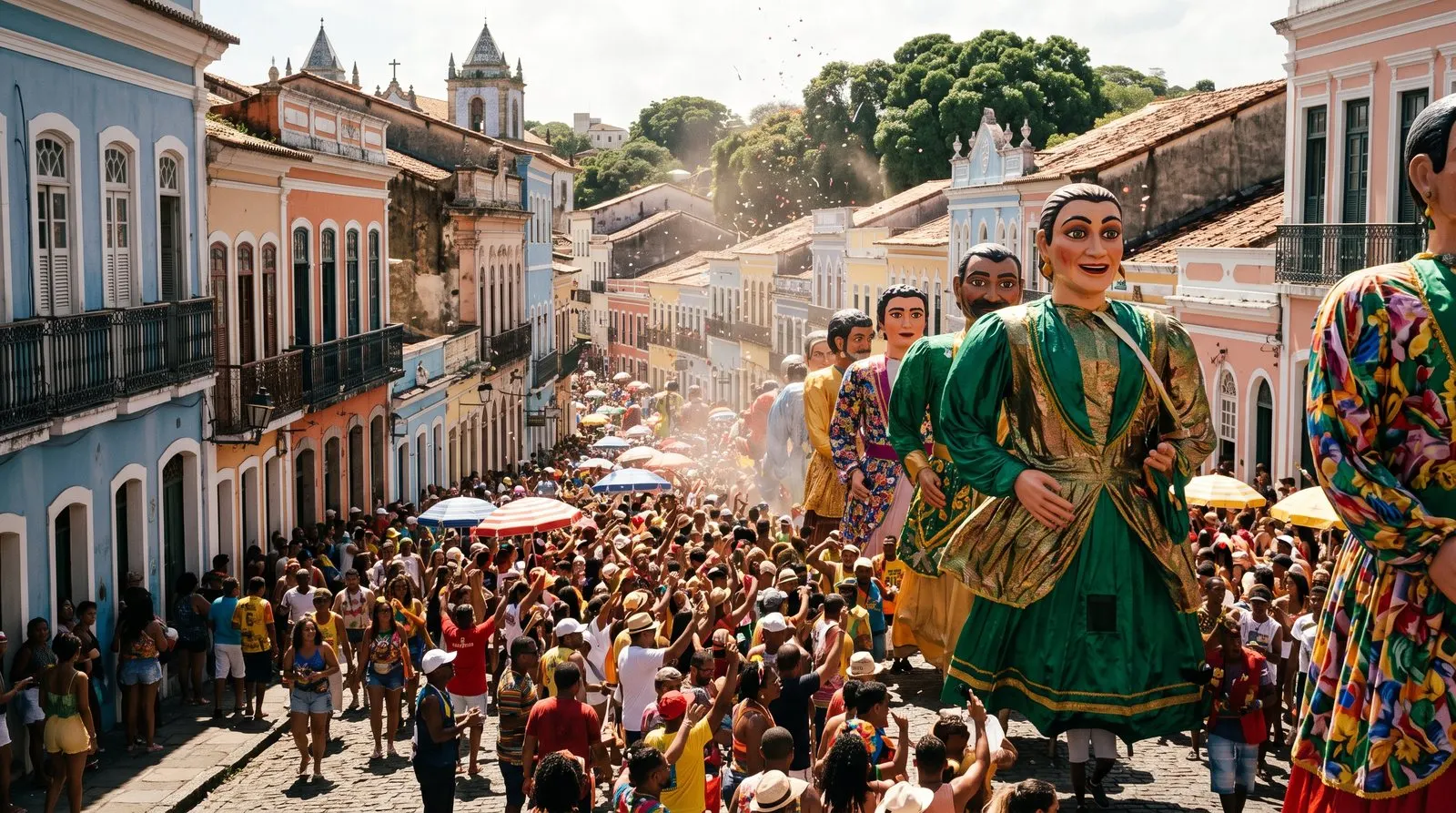
Olinda, in Pernambuco, has its own distinct costume tradition centered on bonecos gigantes, giant papier-mâché puppets carried or worn by a single performer inside the structure. The puppets, often exaggerated caricatures of local characters, celebrities, or historical figures, parade through Olinda's narrow hillside streets as a centerpiece of the city's Carnival, a tradition with roots stretching back to the early twentieth century. Unlike Rio's stadium floats, bonecos gigantes move through the same streets as the crowd, making them one of the most interactive costume traditions in Brazilian Carnival.
Frevo's sombrinha: the umbrella that powers the dance
In Pernambuco's frevo tradition, the small, brightly colored sombrinha, or umbrella, is as essential to the performance as any costume piece. Frevo dancers, known as passistas, use the sombrinha for balance and flair during the style's fast, acrobatic footwork, spinning and snapping it open as a visual accent to the movement. It is a rare example of a prop doubling as a costume element, instantly recognizable as shorthand for Pernambuco's Carnival wherever it appears.
Frequently asked questions
What does fantasia mean in the context of Carnival?+
Fantasia is simply the Portuguese word for costume. It is used for everything from a casual street-party outfit to the elaborate, themed costumes worn in official samba school parades.
Who makes the costumes for Rio's samba schools?+
Costumes and floats are produced inside a samba school's barracão, a dedicated workshop staffed by seamstresses, sculptors, and artisans working under a designer called a carnavalesco, who sets the creative direction for that year's parade.
What is an alegoria?+
An alegoria is a large parade float built by a samba school to represent a scene or chapter of its enredo, or storyline, for that year's Carnival. Schools typically present several floats across a single parade.
What are bonecos gigantes and where can you see them?+
Bonecos gigantes are giant papier-mâché puppets, usually caricatures of well-known figures, carried by a single performer through the streets of Olinda, Pernambuco, as part of that city's Carnival tradition.
Why do frevo dancers carry small umbrellas?+
The sombrinha, a small decorative umbrella, helps frevo dancers, called passistas, balance during the style's fast, acrobatic footwork, and doubles as a visual flourish synonymous with Pernambuco's Carnival.
More Carnival guides
Plan your Carnival