In this guide
Samba and samba-enredo: the rhythm of Rio
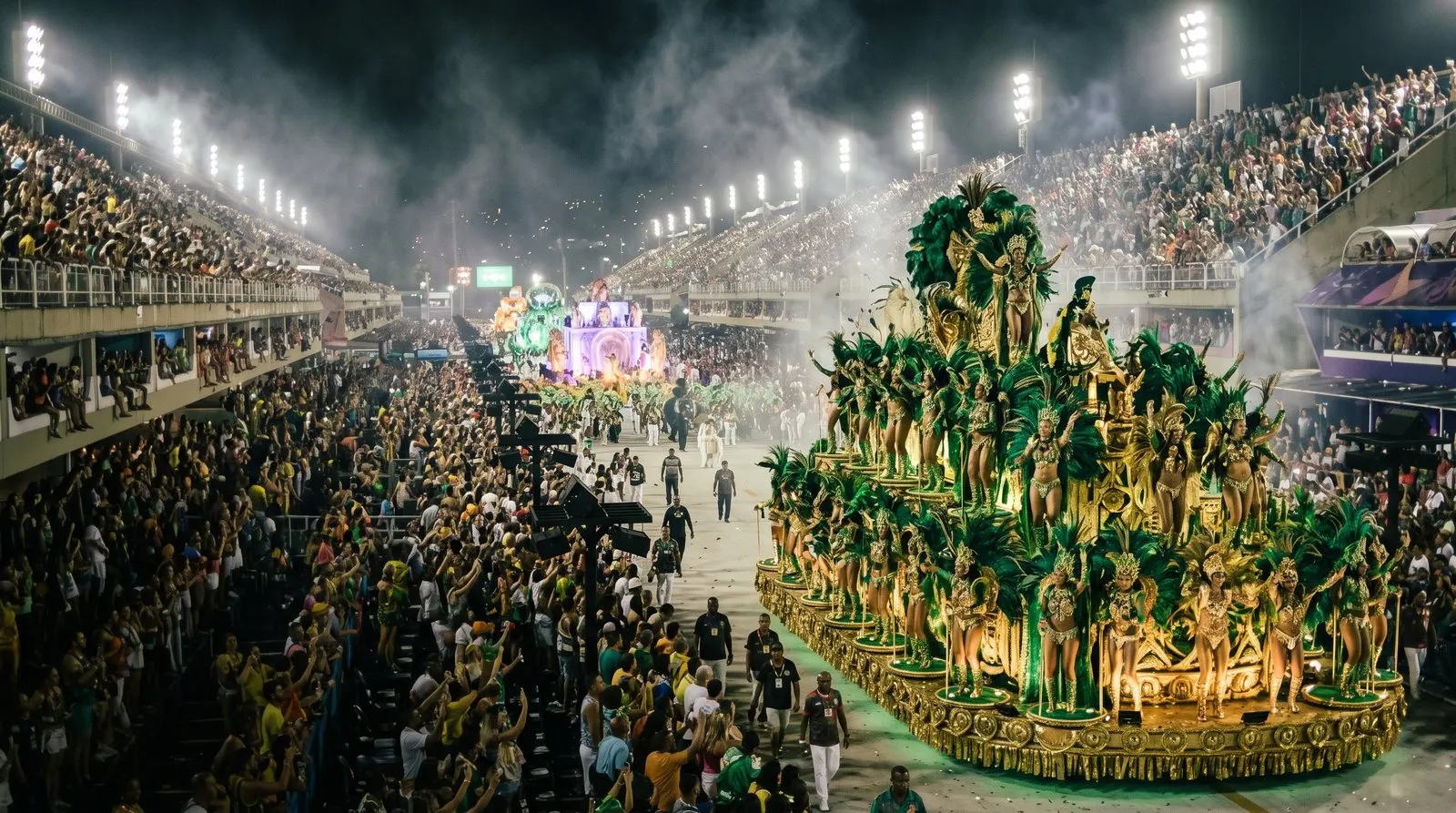
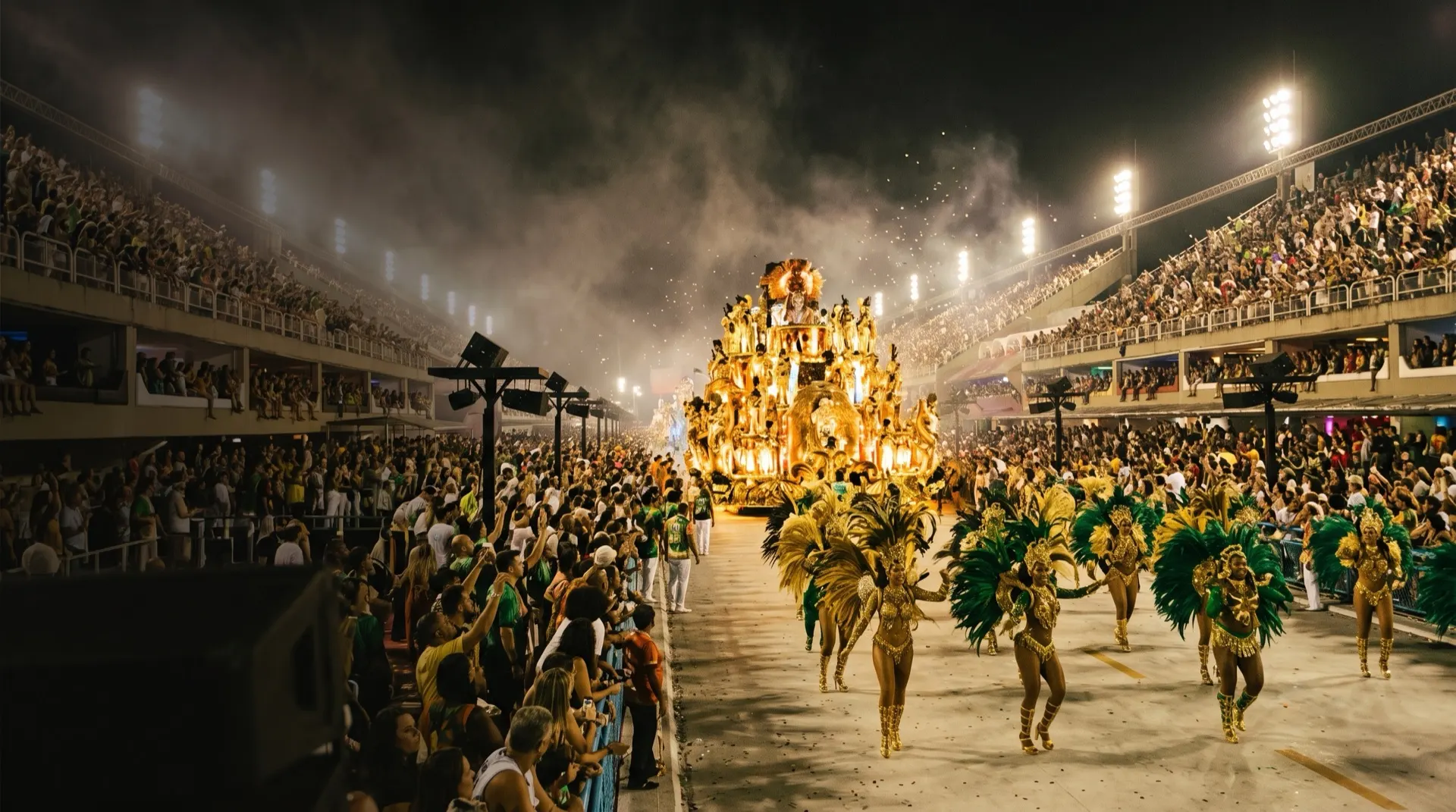
Samba is the musical backbone of Rio's Carnival, a style rooted in Afro-Brazilian rhythmic traditions that evolved through the twentieth century into the sound now synonymous with the city. During the official parade season, each samba school performs a samba-enredo, a theme song written specifically for that year's parade, with lyrics and arrangement built around a chosen storyline, or enredo. Thousands of performers rehearse the same samba-enredo for months so that every voice in the parade, from the drummers to the crowd in the stands, hits the same beat in unison.
Frevo and maracatu: Pernambuco's UNESCO-listed sound
Recife and Olinda, in the northeastern state of Pernambuco, built their Carnival around frevo, a fast, brass-driven style paired with an athletic, acrobatic dance of the same name. Frevo was inscribed on UNESCO's Representative List of the Intangible Cultural Heritage of Humanity in 2012, recognition of both the music and the dance culture surrounding it. Alongside frevo, Pernambuco is also home to maracatu, a slower, more ceremonial tradition built on heavy surdo-style drums and call-and-response singing, closely tied to Afro-Brazilian religious and historical roots.
Axé: Bahia's electric Carnival anthem
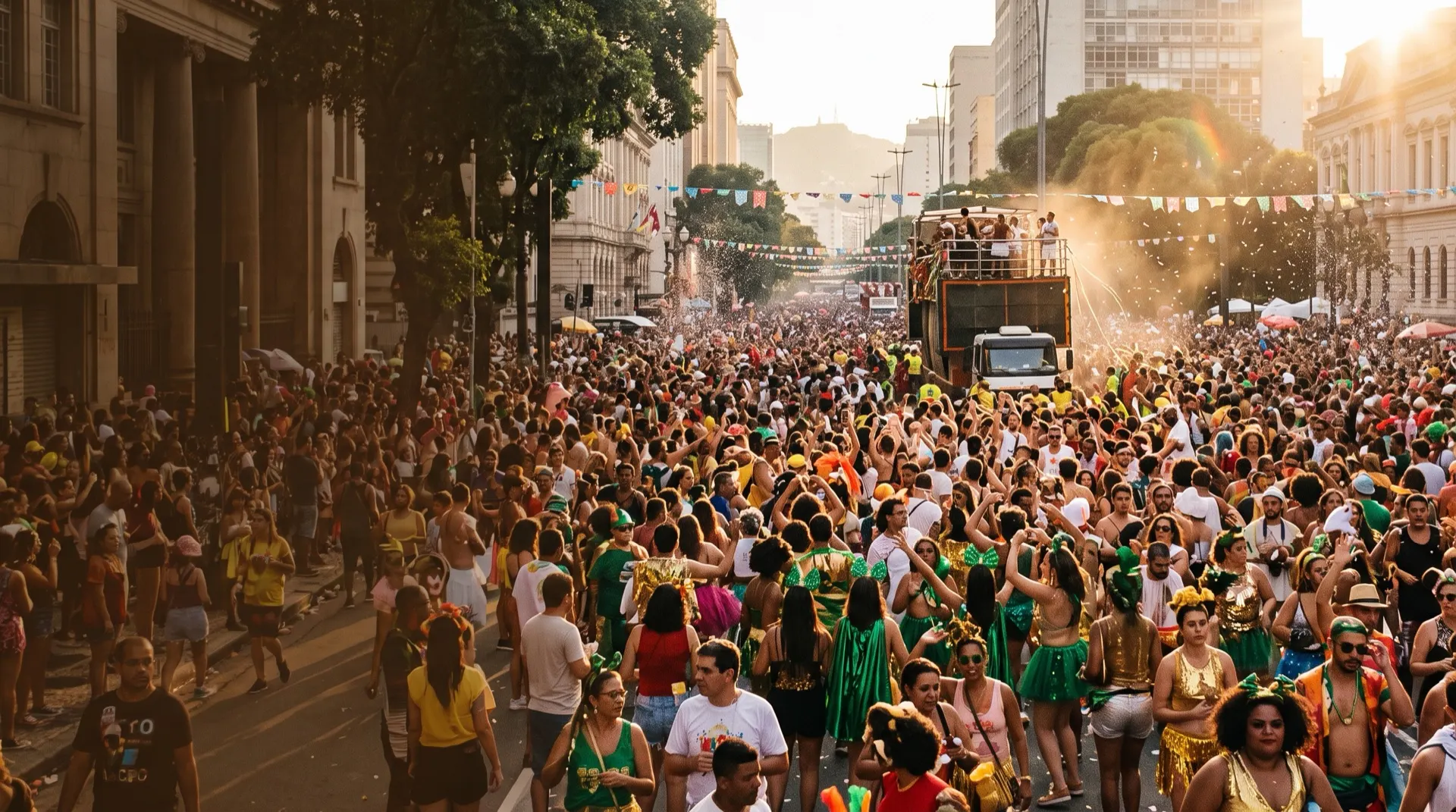
Salvador's Carnival runs on axé, a style that emerged from Bahia in the 1980s and fuses Afro-Brazilian rhythms with pop, reggae, and electric guitar. Axé is inseparable from the trio elétrico, the large sound-system trucks that crawl through Salvador's streets with musicians performing live on top, pulling enormous crowds of dancers behind them for hours. Where Rio's Carnival centers on a stadium parade, axé turns the entire city into a moving concert.
Marchinhas: the original Carnival sing-alongs
Before samba-enredo and axé dominated the airwaves, marchinhas were the sound of Brazilian Carnival. These short, simple, often comic marching songs date back to the early and mid-twentieth century, and many are still sung word for word at street parties today. Marchinhas prize an easy melody and a singable chorus over musical complexity, which is exactly why they have survived for generations as communal Carnival anthems.
Inside the bateria: the instruments that drive the parade
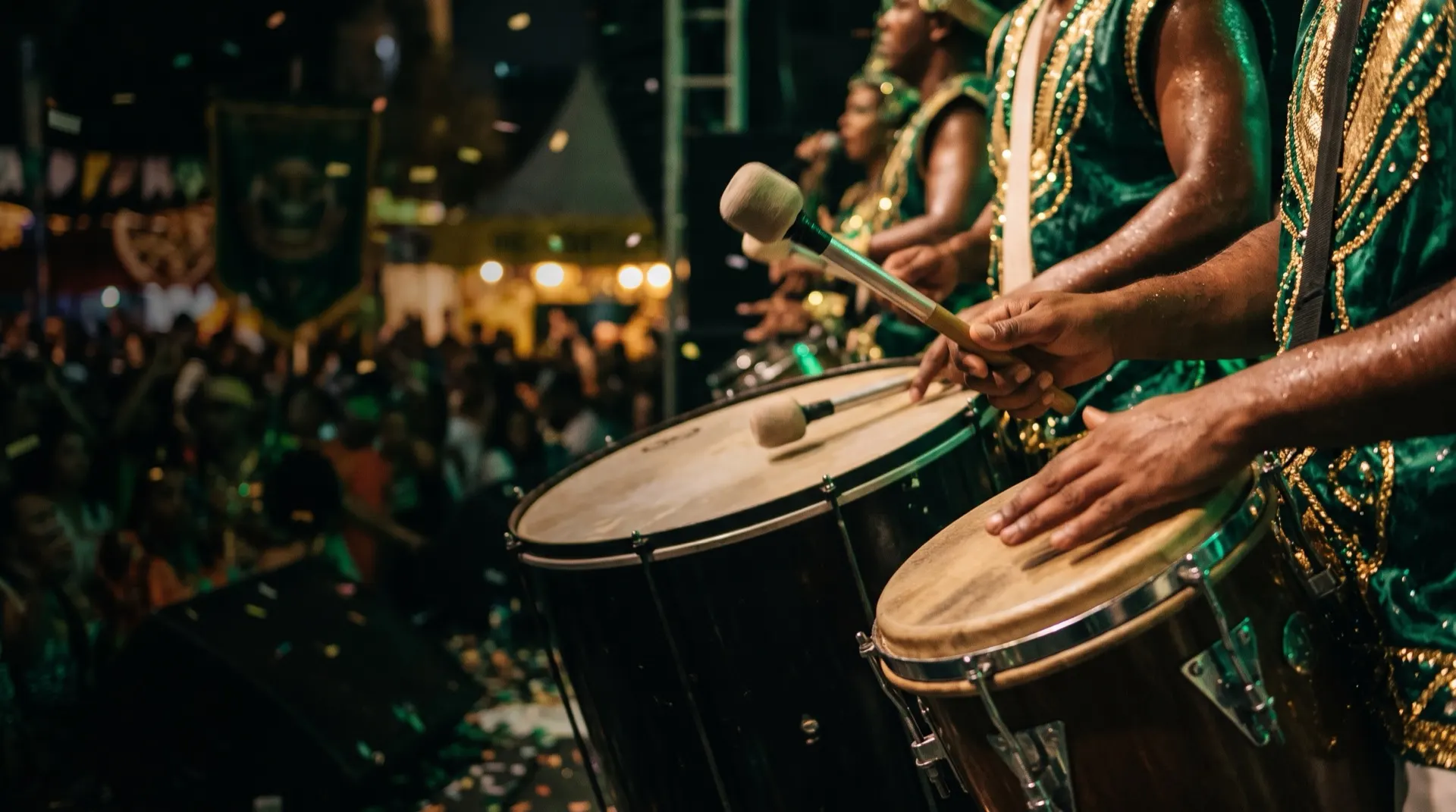
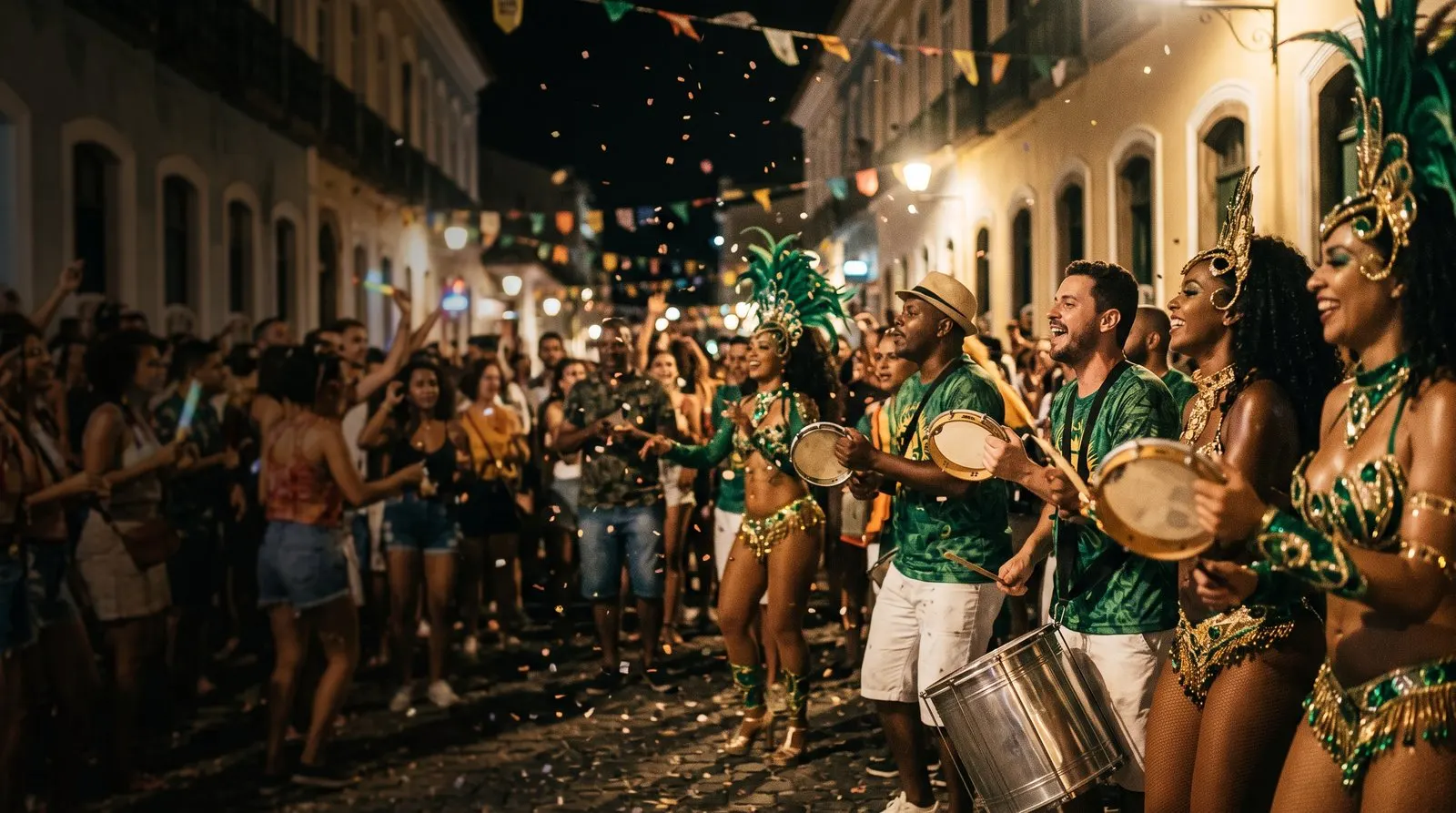
The bateria is the percussion section of a samba school, and it functions as the engine of the entire parade. The surdo, a large bass drum, anchors the tempo; the caixa and repinique carry the rolling patterns and calls that cue the group; the cuíca produces its distinctive high-pitched, almost vocal squeak through friction rather than striking; and the tamborim, agogô, and pandeiro fill out the texture on top. A well-drilled bateria can carry hundreds of performers and an entire float in perfect time without a single conductor visible to the crowd.
How Carnival music shapes the celebration
Music is not background noise at Brazilian Carnival, it is the organizing principle. A samba school's reputation rises or falls on its samba-enredo and its bateria's execution, a bloco's popularity depends on how well its chosen songs get a street singing, and an entire city's Carnival identity, Rio's samba, Salvador's axé, Recife and Olinda's frevo, is defined by its music before anything else. Visitors who learn even a few lyrics or rhythms ahead of time find themselves far more able to join in rather than simply watch.
Frequently asked questions
What is the difference between samba and samba-enredo?+
Samba is the broad musical genre and dance style associated with Rio's Carnival and Brazilian popular music generally. Samba-enredo is a specific category within it, the theme song a samba school writes each year to narrate its chosen storyline during the official parade.
Why is frevo recognized by UNESCO?+
Frevo, the fast brass music and acrobatic dance tradition of Recife and Olinda, was added to UNESCO's Representative List of the Intangible Cultural Heritage of Humanity in 2012, acknowledging its cultural significance to Pernambuco's Carnival.
What makes axé different from samba?+
Axé is a Bahian style that blends Afro-Brazilian rhythms with pop, rock, and reggae influences, typically performed from trio elétrico sound trucks as they move through Salvador's streets. Samba is older, more percussion-centered, and tied to Rio's parade tradition and samba schools.
What instrument makes that squeaking sound in samba music?+
That sound comes from the cuíca, a friction drum played by rubbing a stick against the inside of the drumhead, producing a high-pitched tone that samba baterias use for rhythmic accents and playful effects.
Are marchinhas still played during Carnival today?+
Yes. Marchinhas remain a staple of street Carnival, especially at blocos, where their simple melodies and sing-along choruses make them easy for large, mixed crowds to perform together.
More Carnival guides
Plan your Carnival