In this guide
Frevo and maracatu: the sound of Pernambuco
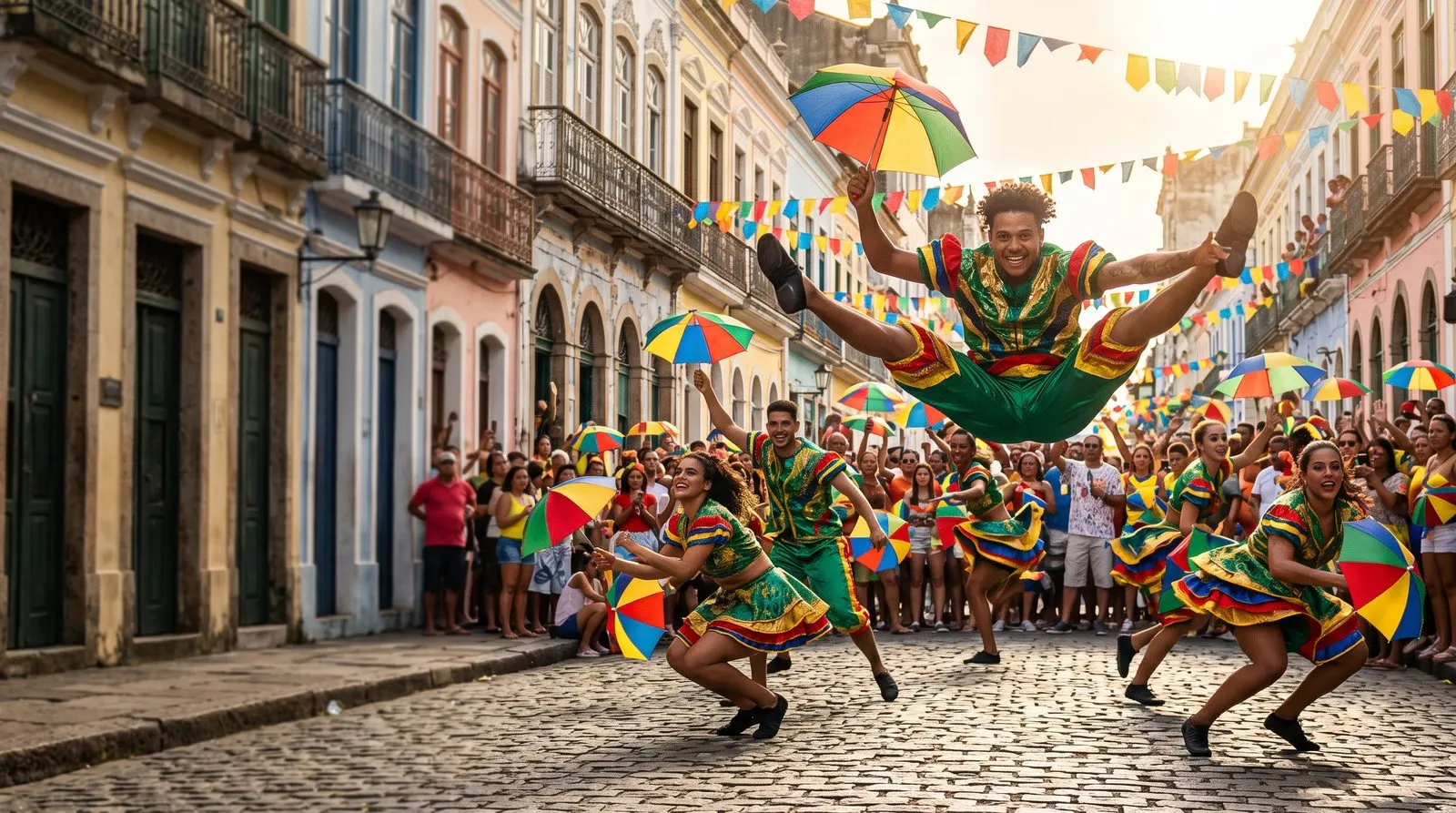
Frevo developed in Recife in the late nineteenth and early twentieth centuries, blending military marches, polka and capoeira movement into a dance so physically demanding that performers often carry a small umbrella, called a sombrinha, to balance their acrobatic steps. In 2012, UNESCO added frevo to its list of Intangible Cultural Heritage, recognising its originality and its role in Pernambuco's identity. Alongside frevo, maracatu offers a slower, deeply ceremonial counterpart, an Afro-Brazilian tradition built around heavy percussion and royal court figures, with maracatu de baque virado performed by groups known as nações, or nations, each led by a king and queen in elaborate dress.
When is Recife and Olinda Carnival 2027?
Recife and Olinda follow the national Carnival calendar, with the main celebrations running from Friday 5 to Tuesday 9 February 2027 and tapering off as Ash Wednesday begins on 10 February. Unlike Rio's stadium schedule, street events across both cities run continuously through this window, often starting earlier in the week with warm-up blocos and pre-Carnival parties. Visitors frequently split their time between the two cities, since a short drive or taxi ride connects Recife's centre to Olinda's historic hill.
Galo da Madrugada: Recife's giant street party
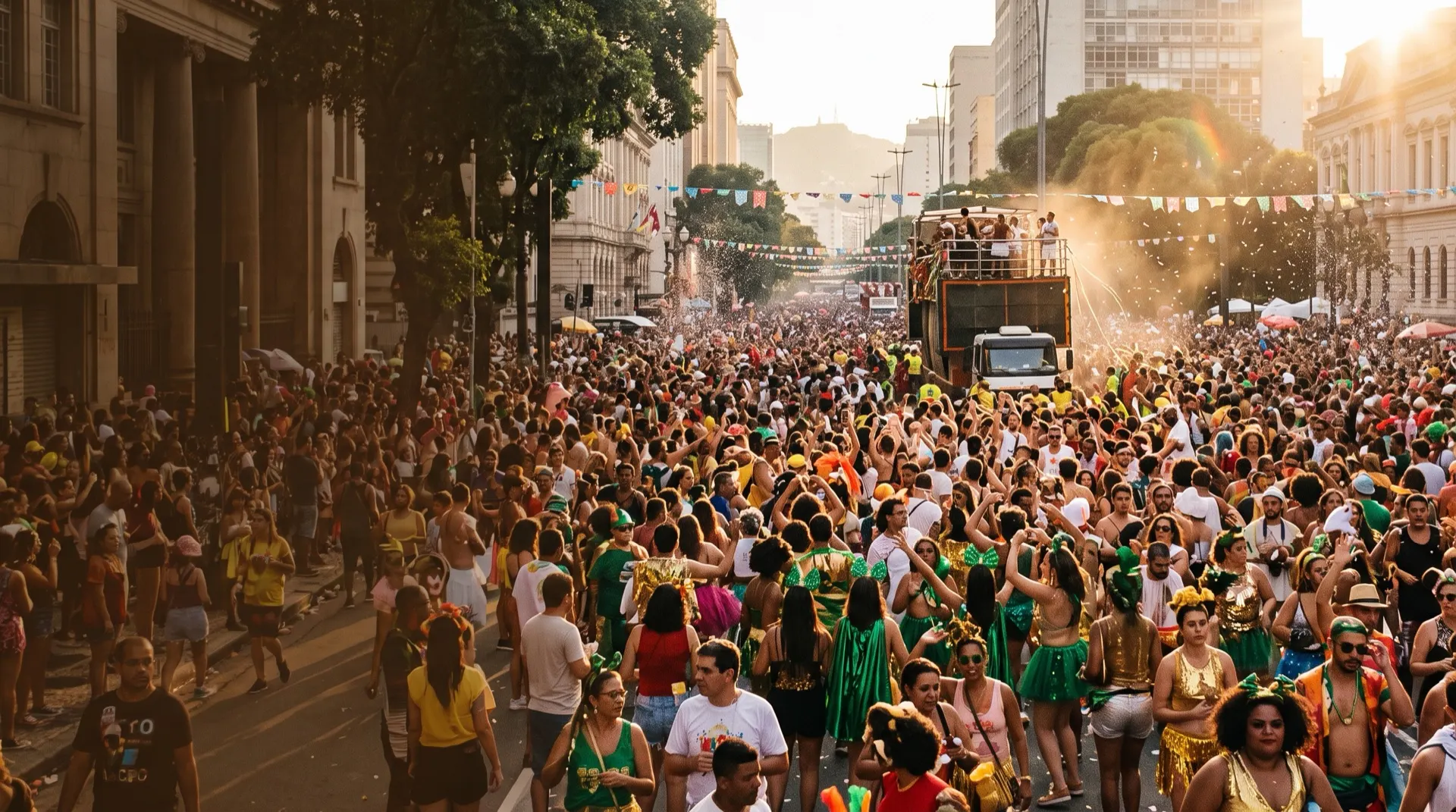
Galo da Madrugada, literally the Rooster of the Dawn, parades through Recife's city centre on the Saturday of Carnival and is widely regarded as one of the largest street Carnival blocos anywhere, drawing enormous crowds that fill the avenues from early morning. Named after its giant rooster mascot, the bloco mixes frevo bands, floats and costumed revellers in a parade that effectively launches Pernambuco's Carnival at full volume. Its scale and energy have made it one of the signature images of Recife's festival season.
Olinda's giant puppets and colonial streets
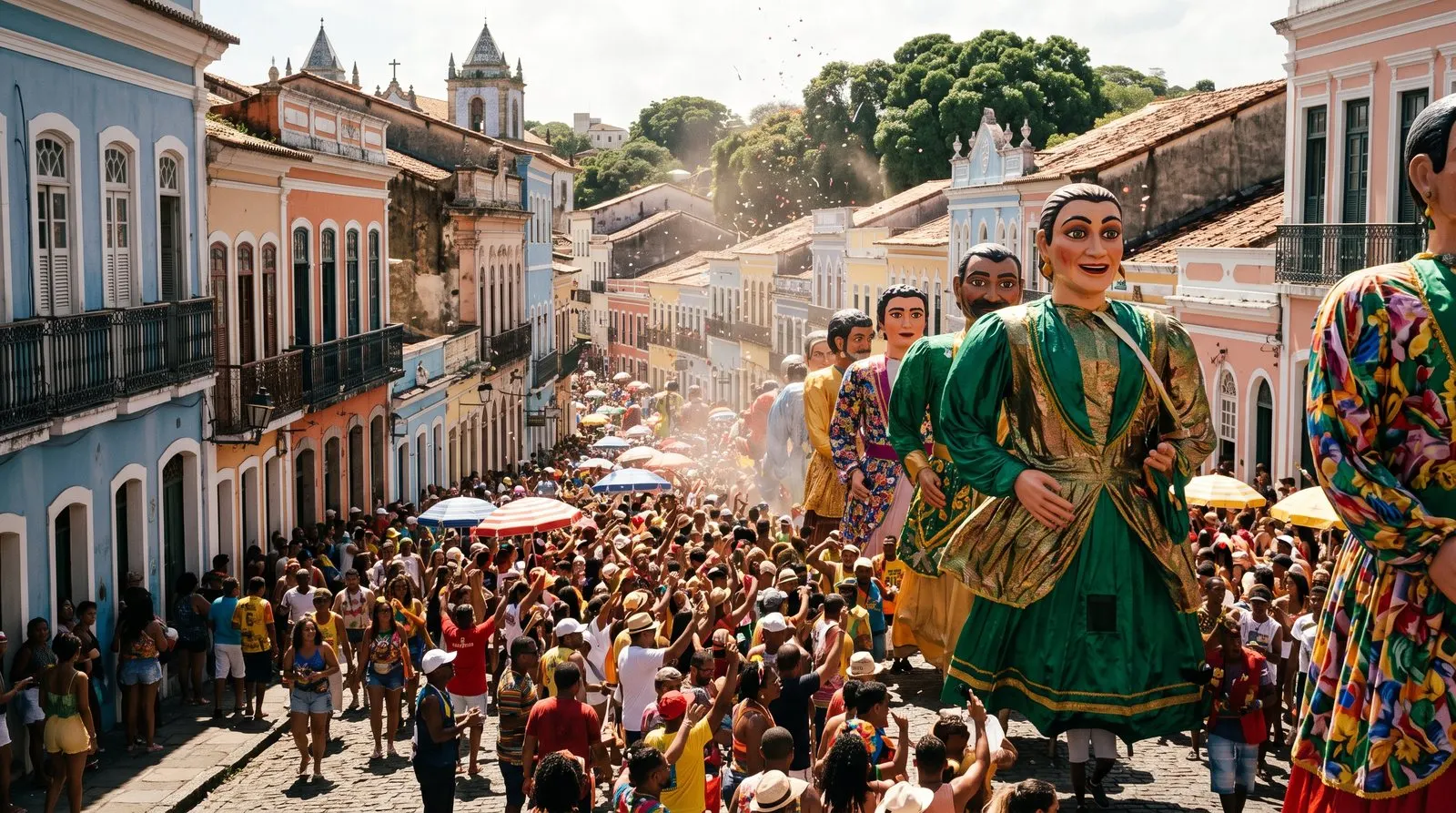
Olinda, a UNESCO World Heritage town known for its colonial architecture and hilltop views over Recife, stages a Carnival built around its bonecos gigantes, giant puppets that tower over the crowds as they are carried and spun through the narrow, sloping streets. The most famous of these figures, O Homem da Meia-Noite, the Midnight Man, has paraded through Olinda since the early twentieth century and remains a beloved symbol of the town's Carnival. The combination of papier-mâché giants, frevo bands and colonial facades gives Olinda's celebration a visual character unlike anywhere else in Brazil.
Costumes, colour and the craft behind the puppets
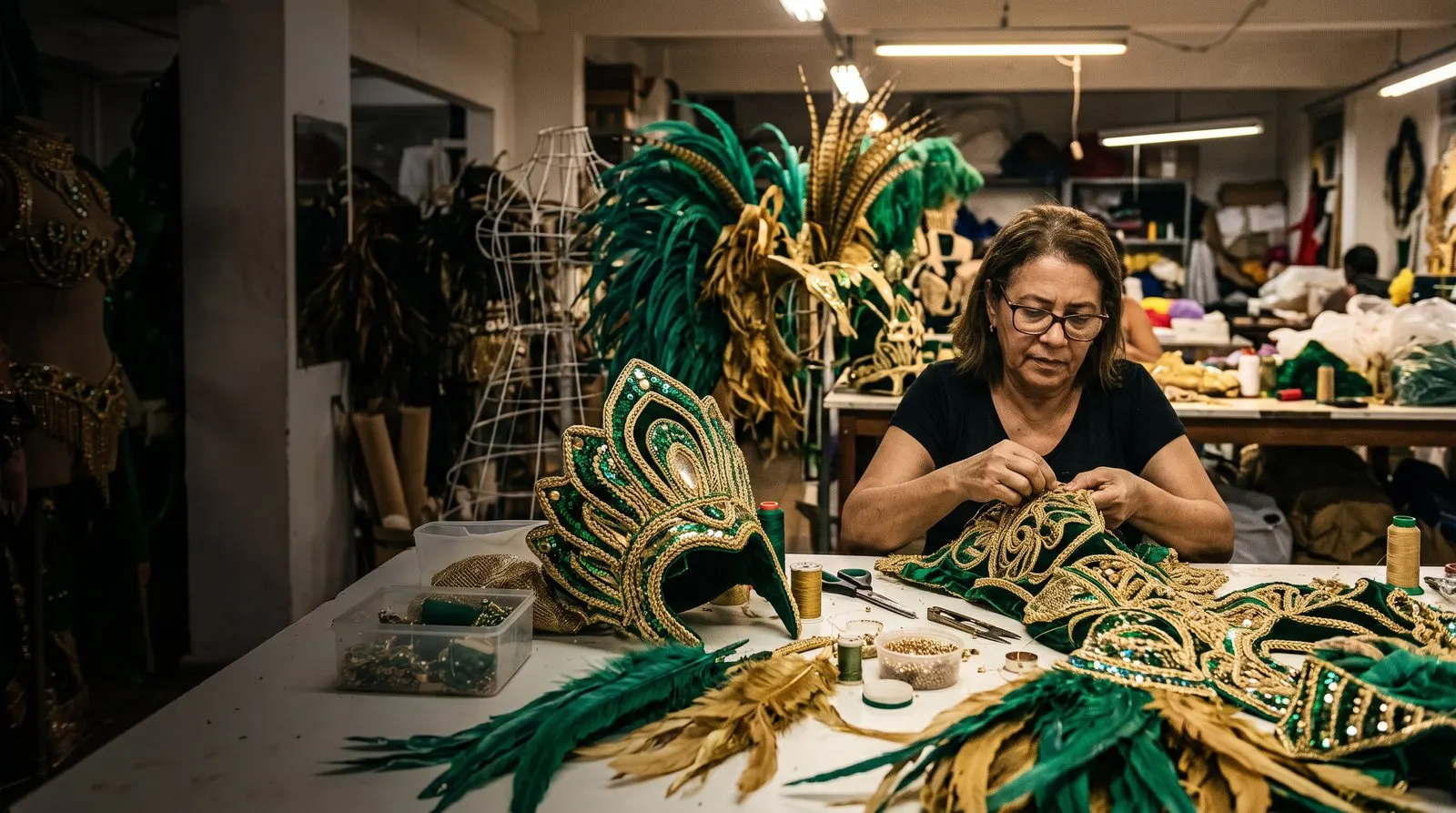
Olinda's bonecos gigantes are built over months by local artisans, using wire, paper and fabric to create oversized caricatures of celebrities, historical figures and folk characters, each one light enough for a single dancer to carry and spin underneath. Maracatu groups invest similar craft into their royal costumes, with queens and kings wearing richly decorated robes, crowns and jewellery that reference West African royal courts. Frevo dancers, by contrast, favour brightly coloured, lightweight outfits designed for speed and movement, with the sombrinha umbrella doubling as both prop and balancing tool.
Where the action happens: Recife Antigo and Olinda's hill
Recife's historic Recife Antigo district, anchored by the Marco Zero Square, hosts stages, concerts and Carnival events throughout the season and serves as a natural gathering point in the city centre. Across the bridge and up the hill, Olinda's old town, with its steep cobbled lanes and brightly painted colonial houses, becomes a dense, walkable Carnival circuit where blocos, puppets and maracatu groups move through streets too narrow for vehicles. Many visitors base themselves between the two, using Olinda's compact scale for daytime wandering and Recife's larger avenues for the big parades.
Experiencing a free, open-air Carnival
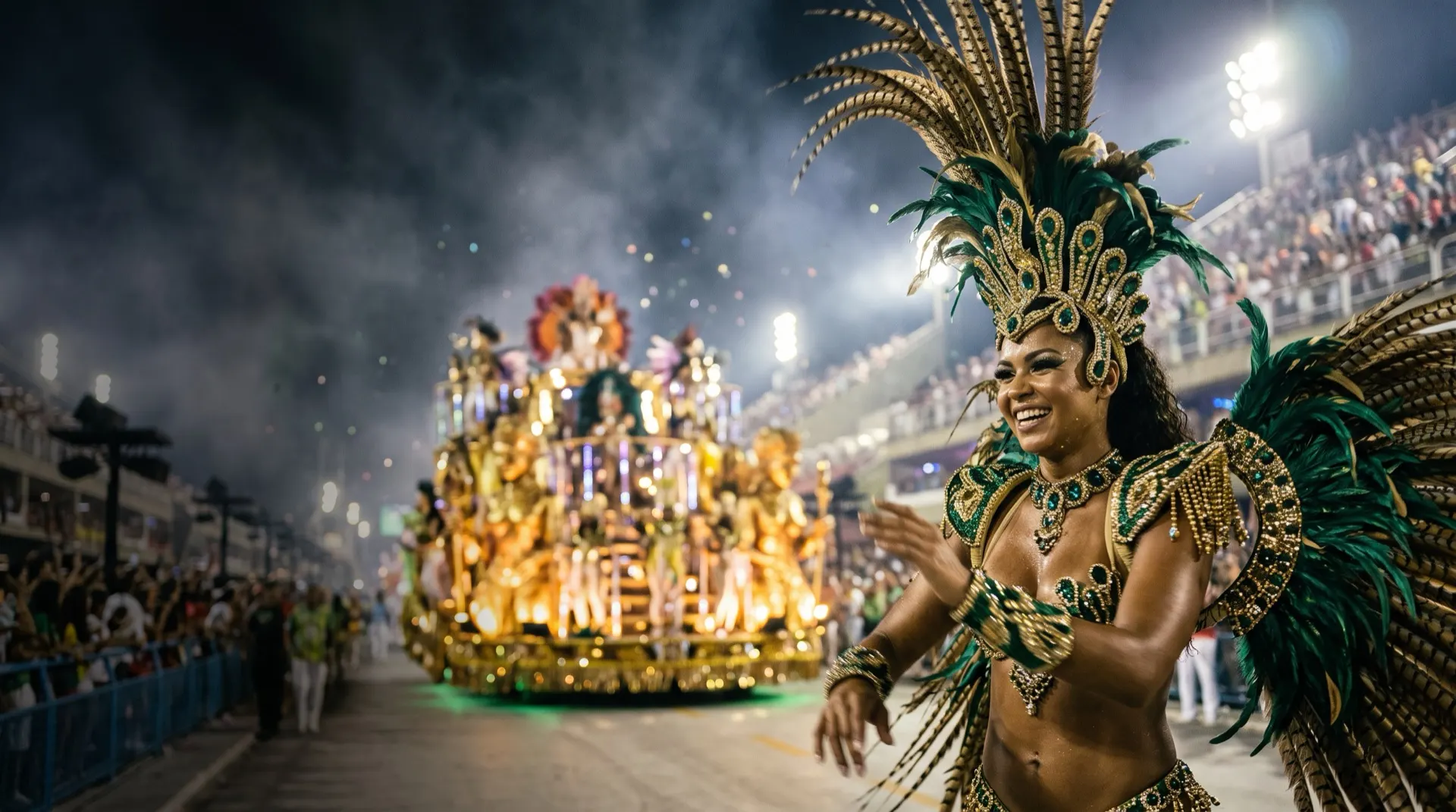
Unlike Rio's ticketed Sambadrome, Recife and Olinda's Carnival is entirely street-based and free to attend, with blocos, frevo orquestras and maracatu groups performing in public squares and along open routes. Comfortable shoes matter more than almost anything else, given the walking involved and Olinda's hilly, uneven streets. Arriving early for major events like Galo da Madrugada or the Homem da Meia-Noite procession secures a better vantage point before the crowds reach their peak.
Frequently asked questions
When is Carnival in Olinda and Recife in 2027?+
Carnival in both cities runs from Friday 5 to Tuesday 9 February 2027, following the national Brazilian calendar, with Ash Wednesday on 10 February closing the season.
What are the giant puppets of Olinda?+
Olinda's bonecos gigantes are oversized papier-mâché and fabric puppets carried and spun through the town's streets during Carnival, with O Homem da Meia-Noite, the Midnight Man, standing as the most famous and long-running figure.
What is frevo and why is it important?+
Frevo is a fast, acrobatic music and dance style from Recife, performed with a small umbrella for balance, and it was recognised by UNESCO as Intangible Cultural Heritage in 2012 for its cultural significance to Pernambuco.
What is Galo da Madrugada?+
Galo da Madrugada is a large street Carnival bloco that parades through central Recife on the Saturday of Carnival, widely regarded as one of the biggest street Carnival gatherings anywhere in the world.
Is Carnival in Recife and Olinda free?+
Yes, the street celebrations in both cities are free and open to the public, with no tickets required to watch frevo bands, maracatu groups or the giant puppet processions.
What is maracatu?+
Maracatu is an Afro-Brazilian musical and ceremonial tradition from Pernambuco built around heavy percussion and royal court characters, with maracatu de baque virado groups led by costumed kings and queens.
More Carnival guides
Plan your Carnival